


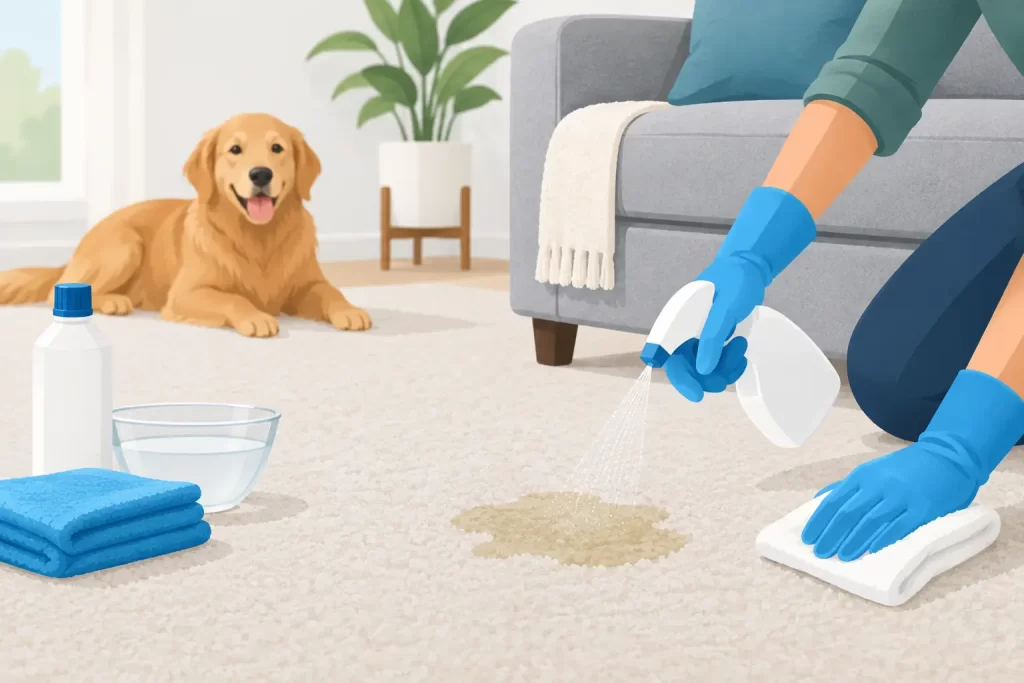
A pet accident can soak deeper than the visible spot. What looks like a small patch on the carpet may have reached the backing, underlay, or subfloor, where odor-causing residue can linger. Knowing how to remove pet urine properly means treating both the stain you can see and the urine crystals you cannot.
Fast action gives you the best chance of a fresh, spotless result. Still, older stains can often be improved with the right method, enough drying time, and professional support when the contamination has traveled below the surface.
How to Remove Pet Urine Before It Sets
Start by blotting, not scrubbing. Place clean white towels or paper towels over the wet area and press firmly to absorb as much liquid as possible. If the accident is on carpet or a rug, stand on the towels briefly to draw moisture up from the fibers. Replace the towels and repeat until they come away nearly dry.
Avoid rubbing the spot. Scrubbing pushes urine farther into the carpet and can roughen or distort the pile. It may also spread the stain into a larger area.
Once you have removed the surface moisture, apply an enzyme-based pet urine cleaner according to its label directions. Enzymatic cleaners are designed to break down the organic compounds in urine rather than simply covering the smell with fragrance. This matters because a pet’s sensitive sense of smell can detect residue long after a room seems clean to people.
Allow the product enough contact time. Many cleaners need to remain damp on the affected area for several minutes to work effectively. Do not rush to dry it with heat unless the product instructions say you can. After treatment, blot away excess moisture and let the area air-dry fully.
Treating Fresh Urine on Carpet and Rugs
Carpet needs a little more care because urine can penetrate beyond the visible fibers. After blotting and applying an enzyme cleaner, cover the area with a clean, lightly weighted towel while it dries. This can help pull remaining moisture upward rather than letting it settle deeper.
Do not saturate the carpet with large amounts of water. Over-wetting can create a larger damp area, delay drying, and in some cases affect the backing or subfloor. A lightly damp treatment is usually more controlled than repeatedly flooding the spot.
When the carpet is dry, check it under good light. If a yellow mark remains, use a carpet-safe stain treatment that is suitable for pet stains. Test any cleaner in an inconspicuous place first, especially on wool, silk, viscose, or handwoven rugs. These materials can react poorly to strong products or excess moisture.
A home carpet machine may help with a recent accident, but it has limits. It can rinse the surface, yet may not extract contamination from the backing and underlay. If odor returns after the carpet dries, the urine likely reached deeper layers and needs more thorough extraction.
What to Avoid on Carpet
Bleach, ammonia, and heavily perfumed cleaners are poor choices for pet urine. Bleach can damage carpet color and fibers. Ammonia has a smell that can resemble urine to some pets, potentially encouraging repeat marking. Perfumed products may temporarily mask odor without removing its source.
Steam cleaning is also not always the answer. High heat can set certain stains and may make lingering odor harder to remove if urine residue has not first been fully treated. Professional hot-water extraction can be very effective when paired with the right pre-treatment and odor-removal process, but it is different from simply applying steam to a stain.
Removing Pet Urine From Upholstery and Mattresses
Cushions, sofas, and mattresses require a gentler approach because moisture can travel deep into padding and foam. Blot the fresh area right away, pressing with clean towels without rubbing. Use a small amount of upholstery-safe enzyme cleaner, and avoid soaking the fabric.
Check the furniture care tag before applying any product. “W” fabrics can generally be cleaned with water-based solutions, while “S” fabrics require solvent-based cleaning. “WS” fabrics may tolerate either method, but “X” means vacuuming only and should be handled by a professional. If there is no tag or you are unsure of the fabric type, test a hidden area first.
For a mattress, use an enzyme cleaner sparingly and blot carefully. A saturated mattress can take a long time to dry and may develop a musty odor. Improve airflow by opening windows, using a fan, or running a dehumidifier. Do not remake the bed until the mattress is completely dry.
If urine has soaked through a cushion insert or mattress padding, surface treatment may not be enough. Professional upholstery cleaning can target the affected layers while helping protect the fabric, filling, and stitching.
Cleaning Pet Urine From Hard Floors
Hard floors are easier to wipe, but they are not always simple to deodorize. Urine can collect in grout lines, seams, gaps between boards, and around baseboards. Start by wiping up the liquid promptly with a clean cloth, then clean the area with a floor-safe neutral cleaner.
For sealed tile, vinyl, laminate, or sealed hardwood, an enzyme cleaner labeled safe for that surface can help remove odor. Use it sparingly and wipe it up as directed. Excess liquid can seep into joints and edges, particularly with laminate and engineered wood flooring.
Unsealed wood, damaged laminate, and porous grout require more caution. If pet urine has penetrated beneath a finish, staining and odor can remain even after surface cleaning. Repeated accidents in the same spot may require professional assessment, sealing, or repair in addition to cleaning.
Finding Old Pet Urine Stains and Odors
An old pet urine problem is often first noticed by smell, particularly on humid days or after the heating system has been running. Look for faint yellowing, darker carpet patches, or areas where your pet repeatedly sniffs, scratches, or returns to mark.
A UV flashlight can help reveal some dried urine deposits in a dark room, although it is not perfect. Other household residues can also fluoresce, so use it as a guide rather than proof. Mark suspected areas with a small piece of tape, then treat one area at a time.
Old stains usually need more than one treatment. Apply an enzyme cleaner thoroughly enough to reach the same depth as the original accident, while staying within the manufacturer’s instructions for your surface. Let it dwell, blot, and allow it to dry completely before judging the result. Odor can seem stronger while the area is damp, so reassess only after full drying.
When Professional Cleaning Is the Better Choice
Call for professional carpet or upholstery cleaning when the odor keeps returning, the stain is old or widespread, or urine has soaked through to the padding or subfloor. This is particularly worthwhile before a move-out inspection, when preparing a rental property for new tenants, or when restoring a home after a new puppy or senior pet has had repeated accidents.
Professional equipment provides stronger extraction than most household machines, but the process should be matched to the material and extent of contamination. A technician may use targeted pre-treatment, controlled extraction, odor treatment, and careful drying methods. For severe cases, lifting carpet to inspect the underlay or subfloor may be necessary. It depends on how much urine is present, how long it has been there, and the type of flooring beneath it.
Eco Smart Cleaning approaches carpet, rug, and upholstery care with attention to the surface, the source of the odor, and the drying process. That detailed approach helps protect your home while delivering a cleaner, more comfortable result.
Helping Prevent Repeat Accidents
Cleaning the spot thoroughly is only one part of the solution. If a pet continues returning to the same location, make sure there is no remaining odor and consider whether a change in routine, stress, illness, or access to the outdoors is contributing. Persistent changes in toilet habits are worth discussing with a veterinarian.
Keep enzyme cleaner and clean white towels on hand so you can respond quickly. For young pets, older pets, or homes with several animals, washable protective covers and regular carpet maintenance can reduce the pressure when accidents happen.
A clean home should feel comfortable for every member of the household, paws included. Address pet urine promptly, treat the material with care, and ask for professional help when the odor has gone beyond the surface.