

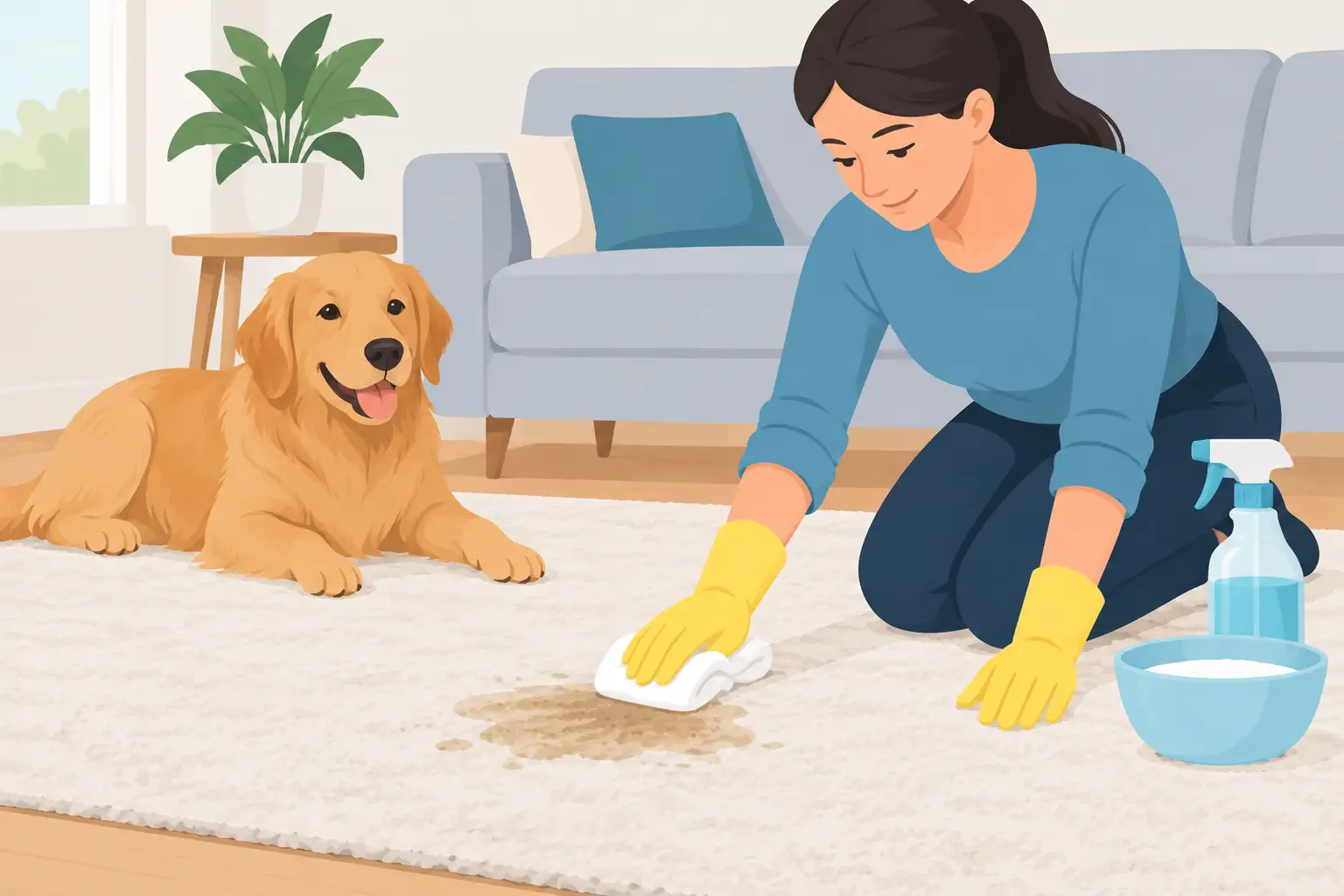
A pet accident can turn from a small spot into a stubborn odor surprisingly quickly, especially on a thick rug or one with a jute, wool, or cotton backing. Knowing how to remove pet stains from rugs promptly helps protect the fibers, keeps your home fresh, and reduces the chance that your pet will return to the same place.
The right method depends on what the rug is made from, how long the stain has been there, and whether urine has reached the rug pad or floor underneath. Start gently, avoid soaking the rug, and use stronger treatment only when the stain calls for it.
Act Fast Without Rubbing
Fresh accidents are much easier to treat than dried stains. Begin by lifting as much moisture or solid material as possible before applying any cleaner.
For urine, place clean white towels or paper towels over the area and press firmly. Stand on the towels if needed, then replace them and repeat until they come away mostly dry. Do not rub the spot. Rubbing pushes moisture deeper into the rug pile and spreads the stain outward.
For vomit or feces, carefully lift the material with a spoon, dull knife, or paper towel. Work from the outside edge toward the center so you do not smear it across a larger area. Once the surface material is removed, blot any remaining moisture before moving on to cleaning.
White cloths are best because colored towels can transfer dye onto a light rug. Avoid heat at this stage. A hair dryer, steam cleaner, or hot water can set some stains and make odors harder to remove.
Check the Rug Before You Clean
A rug is not the same as wall-to-wall carpet. Many area rugs have delicate fibers, unstable dyes, handwoven details, or natural-fiber backings that react poorly to excess water.
Check the care label if one is available. Wool, silk, viscose, jute, sisal, seagrass, and antique or hand-knotted rugs deserve extra caution. These materials can shrink, brown, bleed color, or lose their shape when saturated. If the rug is valuable, handmade, or has a strong odor beneath the surface, professional rug cleaning is often the safer choice.
Before using any solution, test it in a small hidden corner. Apply a small amount, blot with a white cloth, and wait for the area to dry. If color transfers or the fibers change texture, stop using that product.
How to Remove Pet Stains From Rugs Step by Step
For most washable synthetic rugs, a mild solution and careful blotting will handle a fresh stain without harsh chemicals.
1. Make a gentle cleaning solution
Mix a small amount of clear dish soap with cool water. Use only enough soap to create a lightly sudsy solution. Too much detergent leaves residue behind, which can attract dirt after the rug dries.
Dampen a clean white cloth with the solution. The cloth should be moist, not dripping. Apply it to the stained area by blotting from the outer edge toward the center.
2. Rinse away the soap
Use a separate cloth lightly dampened with clean, cool water to blot away the soap. Repeat with dry towels to pull up moisture. This rinse step matters because leftover cleaner can leave the rug feeling stiff or looking dull.
Do not pour water directly onto the rug. Saturating the backing can allow moisture to reach the pad, subfloor, or timber flooring below. It can also create conditions for mildew if the rug stays damp for too long.
3. Treat the odor at its source
Pet urine contains compounds that can leave an odor even after the visible mark has faded. An enzyme-based pet stain cleaner is usually the most effective option for urine because it is designed to break down the organic residue that pets can still detect.
Follow the product directions closely. Enzyme cleaners need enough contact time to work, but they should not be used on every rug type without a spot test. Do not combine an enzyme cleaner with bleach, ammonia, vinegar, or another cleaning product. Mixing products can reduce their effectiveness or create unsafe fumes.
For a light, fresh odor on a colorfast synthetic rug, baking soda can help after the rug is mostly dry. Sprinkle a light layer over the affected area, leave it for several hours, then vacuum thoroughly. Baking soda is useful for surface odor, but it will not replace proper cleaning when urine has soaked into the backing.
4. Dry the rug completely
Press dry towels into the cleaned area until they absorb as much moisture as possible. Then allow airflow around the rug. Open windows when conditions allow, use a fan, or raise the rug slightly so air can circulate underneath.
The rug should be completely dry before it goes back into regular use. A damp rug can trap odors and may develop mildew, particularly in humid rooms or on top of dense rug pads.
Common Pet Stain Mistakes to Avoid
A quick response is helpful, but the wrong method can make a manageable accident harder to fix. Avoid using ammonia-based cleaners. Urine naturally contains ammonia-like odors, and some pets may interpret the scent as a signal to revisit that area.
Bleach is also a poor choice for rugs. It can permanently remove color, weaken fibers, and leave a harsh smell in the room. Hydrogen peroxide may lighten some stains, but it can also bleach dyes, so it should only be considered after a thorough spot test and only on suitable light-colored, colorfast materials.
Heavy scrubbing is another common problem. Even when a stain appears to disappear, aggressive brushing can roughen the fibers, spread the stain, and leave a visibly worn patch. Blotting takes more patience, but it protects the rug’s finish.
Finally, do not cover the spot with furniture or place the rug back over a pad while it is damp. The hidden moisture is where lingering odor and mildew problems begin.
When the Stain Has Dried or Keeps Coming Back
Old pet stains often need more than one treatment. Dried residue may be deep in the rug pile, backing, pad, or flooring below. Start by lightly dampening the area with an appropriate enzyme cleaner, following the label directions, then blot and allow it to dry fully.
If the odor returns on humid days or after cleaning, that is a sign the contamination may be below the surface. Blacklight inspection can sometimes reveal older urine spots that are difficult to see in normal lighting. At this point, repeated home treatments may add moisture without fully removing the cause.
Professional extraction equipment can remove embedded soil and residue more effectively than surface blotting. For delicate rugs, a cleaning professional can assess the fiber type, dye stability, backing condition, and level of contamination before choosing a safe method. This is particularly useful for move-out cleaning, rental inspections, or rugs in busy family rooms where a fresh, spotless result matters.
Help Prevent the Next Stain
Accidents happen, especially with puppies, senior pets, illness, new routines, or changes in the household. A washable rug near entryways or pet resting areas can make routine care easier. Using a quality rug pad can also protect the floor underneath and reduce the amount of liquid that passes through.
Keep an enzyme cleaner, white towels, and a small spray bottle of cool water in an easy-to-reach spot. A fast, calm response is far more effective than trying several harsh products after the stain has dried.
If accidents are frequent or sudden, consider speaking with a veterinarian. Cleaning the rug removes the evidence, but identifying a health or behavior change helps protect both your pet and your home.
A clean rug should feel comfortable underfoot and smell neutral when you walk into the room. When a stain is deep, recurring, or on a delicate material, getting professional help early can preserve the rug and spare you the frustration of treating the same spot again.


 +64 021 480 489