

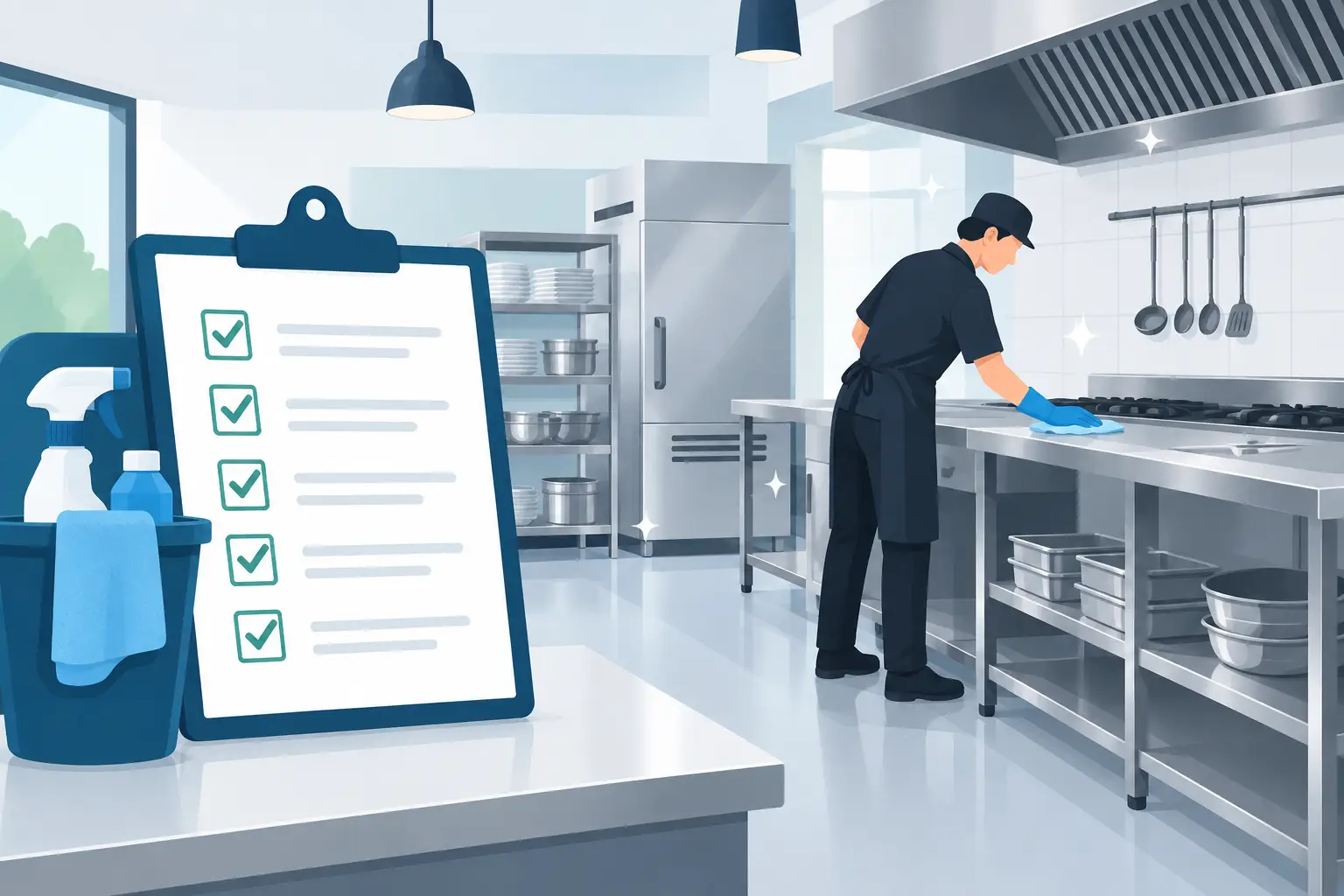
A busy service can leave behind more than full pans and used utensils. Grease settles on equipment, food debris reaches hard-to-see corners, and high-touch surfaces quickly become a hygiene concern. A clear restaurant kitchen cleaning checklist gives every shift a consistent standard, helping protect food safety, support staff, and keep the kitchen ready for the next rush.
Cleaning is not just about making a kitchen look presentable at closing time. It is part of day-to-day operations. When tasks are assigned by frequency and checked off properly, small problems are less likely to become odors, pests, slippery floors, equipment damage, or a failed inspection.
How to Use a Restaurant Kitchen Cleaning Checklist
The best checklist is specific enough to be useful but realistic enough that staff can complete it during a busy shift. Divide duties into daily, weekly, and monthly tasks, then assign responsibility by station or role. A closing cook may handle the range and prep surfaces, while a manager verifies coolers, floors, and sanitation records.
Keep the checklist where people will use it, such as in the kitchen office or near the closing station. Staff should initial completed tasks, and a supervisor should review the work before locking up. This creates accountability without turning cleaning into guesswork.
Cleaning products also matter. Food-contact surfaces require products that are appropriate for the surface and used according to label directions. Sanitizer must be mixed at the correct concentration and allowed to sit for the required contact time. Using too much product can be as problematic as using too little, particularly around food preparation areas.
Daily Restaurant Kitchen Cleaning Checklist
Daily cleaning should remove food residue, grease, spills, and bacteria before they have time to build up. These tasks are the foundation of a safe, fresh, and professional kitchen.
During Service
Clean as you go whenever possible. Wipe spills promptly, keep raw and ready-to-eat food preparation areas separate, and replace wiping cloths when they become heavily soiled. Empty waste bins before they overflow, especially around prep areas and dish stations.
High-touch points deserve regular attention throughout the day. This includes refrigerator handles, freezer pulls, faucet handles, door plates, switch panels, POS screens, and shared equipment controls. These surfaces can look clean while still carrying grease and germs from repeated contact.
At Closing
At the end of service, begin with food safety. Store food correctly, label and date containers, remove expired items, and clean up all spills inside coolers and dry-storage areas. Sweep beneath shelving where crumbs can attract pests.
Your daily closing checklist should include:
- Wash, rinse, and sanitize food-contact surfaces, including prep tables, cutting boards, sinks, slicers, and small appliances.
- Clean and sanitize utensils, pans, racks, and dishwashing equipment according to the manufacturer’s instructions.
- Degrease cooktops, grills, flat tops, fryer exteriors, oven doors, and surrounding splash areas after equipment has cooled safely.
- Empty, clean, and reliner garbage and recycling bins. Wipe lids, handles, and the floor beneath them.
- Sweep and mop kitchen floors, paying close attention to corners, walk-in entrances, under counters, and around cooking equipment.
- Clean restroom touchpoints and restock soap, paper towels, and toilet paper if the kitchen team is responsible for these areas.
Floors need particular care in a commercial kitchen. A quick mop over visible marks may improve appearance, but it will not reliably remove grease. Use a suitable degreaser for the floor type, change mop water when it becomes dirty, and make sure the floor dries safely. Wet-floor signs should remain in place until the area is completely dry.
Weekly Kitchen Cleaning Tasks
Weekly work reaches the areas that daily service cleaning does not always cover. Schedule these tasks for a quieter period, ideally with enough staff to move light equipment safely and complete the work without rushing.
Pull movable equipment away from walls and clean behind and underneath it. Grease, dust, dropped food, and packaging can accumulate in these spaces quickly. Clean the sides of refrigerators, freezers, ovens, and dishwashers, along with wall surfaces and baseboards nearby.
Wash and sanitize shelving in walk-ins, reach-ins, dry storage, and prep areas. Check for leaks, damaged containers, and expired stock while shelves are clear. This is also a practical time to rotate inventory and make sure food is not stored directly on the floor.
Degrease the exterior of exhaust hoods, filters where appropriate, and accessible ventilation surfaces. Hood systems require careful maintenance, and professional service is often needed for deeper grease removal. Do not treat this as a cosmetic task. Built-up grease can affect air quality, create odors, and increase fire risk.
Weekly cleaning should also cover drains. Remove visible debris from drain covers, clean surrounding floor areas, and use an approved method for odor control. Never mix cleaning chemicals or pour unsuitable products into drains, as this can create hazardous fumes or damage plumbing.
Monthly and Periodic Deep Cleaning
Some kitchen areas need a more thorough clean on a monthly, quarterly, or scheduled basis. The right frequency depends on menu volume, cooking methods, ventilation, foot traffic, and local health requirements. A café with light baking needs a different plan from a high-volume restaurant with fryers, grills, and long service hours.
Focus monthly attention on walls, ceilings, light fixtures, vents, storage-room corners, and the tops of tall equipment. Clean refrigerator gaskets, inspect seals for damage, and vacuum or brush condenser areas only when it is safe and allowed by the equipment manufacturer. Poorly maintained refrigeration can work harder, waste energy, and put stored food at risk.
Deep-clean ovens, fryer areas, grease traps as required, and hard-to-reach floor edges. Professional cleaning may be the sensible option for extraction systems, heavily greased equipment, commercial floors, and after-hours deep cleaning. It allows the kitchen team to focus on food and service while specialists handle the time-consuming work with appropriate equipment and products.
Build Cleaning Around Food Safety
A kitchen can appear tidy yet still fall short on hygiene. The difference comes down to process. Cleaning removes visible dirt and grease. Sanitizing reduces microorganisms on properly cleaned food-contact surfaces. Both steps are needed, in the correct order.
Use separate cleaning tools for restrooms, dining areas, and food preparation spaces. Color-coded cloths and mop heads can reduce cross-contamination when staff are trained to use them correctly. Store chemicals away from food, clearly label secondary containers, and keep safety data accessible for the team.
It also helps to inspect as you clean. Look for cracked tiles, loose seals, worn floor surfaces, standing water, pest activity, and equipment leaks. Reporting these issues early is part of maintaining a safe kitchen, not an extra task for a quiet day.
Keep Standards Consistent When Service Gets Busy
The most effective cleaning plans are built for real shifts, not ideal ones. If a checklist has too many vague jobs, it will be skipped when tickets are coming in. Make each task clear: name the surface, the required product or method, the frequency, and the person responsible.
Managers should spot-check completed work rather than relying only on initials. A clean hood exterior, a grease-free floor edge, or a fresh-smelling drain tells you far more than a box marked complete. Regular checks also give staff a chance to ask questions and correct issues before they become routine.
For restaurants with limited closing time or intensive grease buildup, a scheduled professional clean can strengthen the daily program. Eco Smart Cleaning supports commercial spaces with detailed, flexible cleaning services designed to keep high-traffic areas fresh, safe, and ready to make a professional first impression.
A kitchen earns trust long before a plate reaches the table. Give your team a practical checklist, allow enough time to do the work properly, and make cleanliness part of the standard customers can feel in every meal.


 +64 021 480 489