
A clean office is not created only when the cleaning crew arrives after hours. It is protected throughout the day by the people using the space. This office cleaning checklist for employees sets clear, reasonable expectations for keeping workstations, shared areas, and high-touch surfaces fresh, safe, and presentable without turning staff into professional cleaners.
The goal is simple: everyone takes care of the messes they create, while scheduled commercial cleaning handles the detailed, technical work. That division keeps standards consistent, protects employee time, and helps visitors see a professional first impression from the moment they walk in.
Set Clear Boundaries Before You Start
Employees should not be expected to deep-clean restrooms, remove carpet stains with unknown products, handle bodily fluids, or use commercial equipment without training. Those jobs require the right products, protective measures, and cleaning procedures. A workplace checklist works best when it focuses on everyday care: tidying, wiping, reporting issues, and reducing clutter.
Assigning ownership also matters. Every desk should have an individual owner, while kitchens, meeting rooms, reception areas, and supply spaces need a rotating schedule or designated team responsibility. If everyone assumes someone else will take care of a shared space, it usually stays dirty longer than it should.
Keep approved cleaning supplies accessible in clearly labeled locations. Provide microfiber cloths, surface-safe disinfectant, paper towels, gloves, waste bags, and a small brush and dustpan. Avoid placing strong chemicals in an open common area or asking employees to mix products. More product does not always mean a cleaner surface, and incorrect use can damage finishes or create a safety risk.
Daily Office Cleaning Checklist for Employees
A daily routine should take only a few minutes per person. It prevents the small problems – crumbs, fingerprints, overflowing bins, food odors, and clutter – from becoming visible hygiene and presentation issues.
At individual desks
Employees should clear food packaging, drink cups, and personal waste before leaving for the day. Papers that contain customer, financial, or employee information should be filed, secured, or shredded rather than left on a desk overnight.
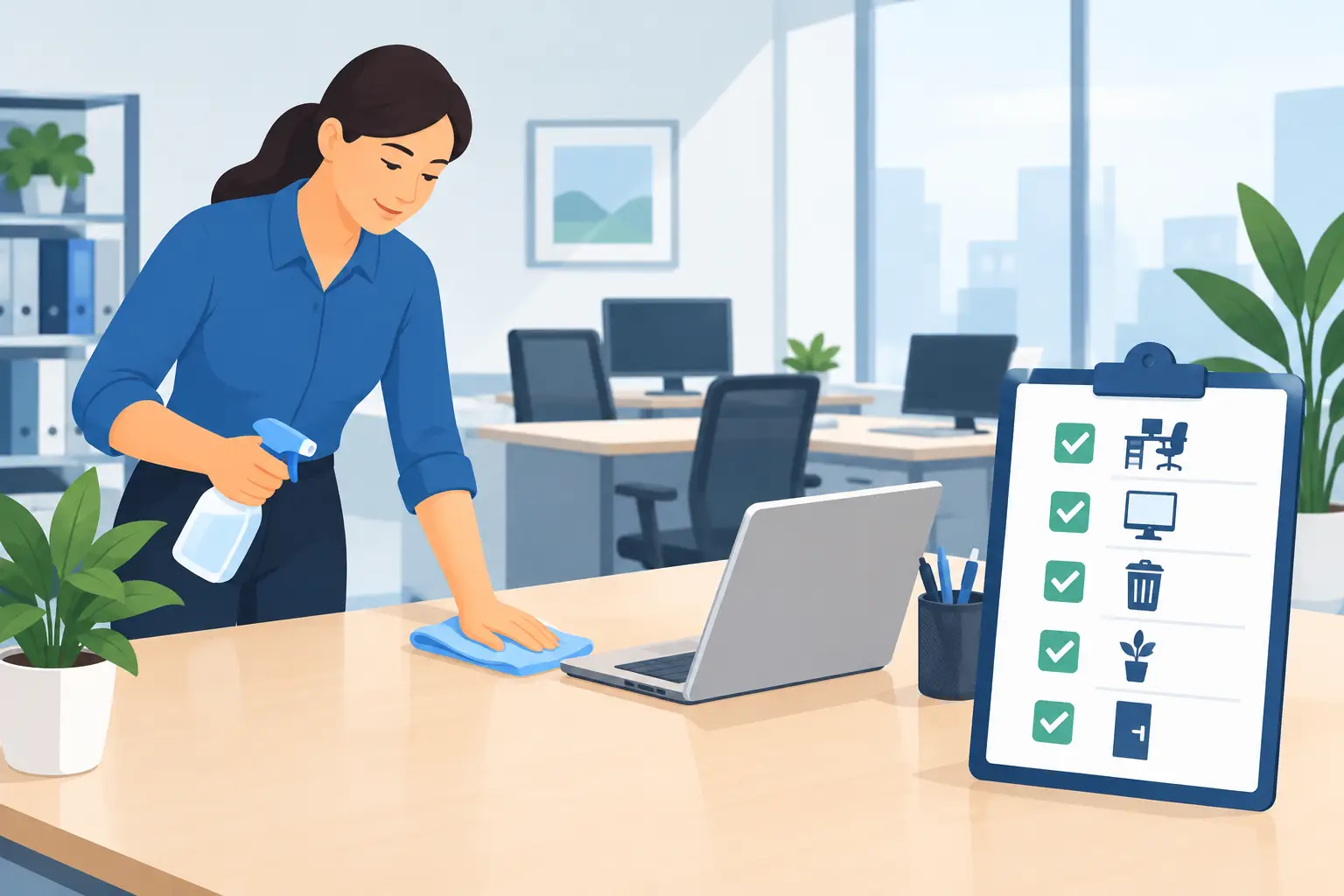
Wipe down the desk surface if there has been a spill, food, or visible dirt. Keyboard, mouse, phone, headset, and desk controls are high-touch items, so they should be cleaned with a product approved for electronics or the manufacturer’s instructions. A lightly damp microfiber cloth is often safer than spraying directly onto equipment.
Personal items are fine, but they should not take over the usable workspace. Keeping desks orderly makes routine professional cleaning faster and ensures a colleague can access the area if needed.
In shared kitchens and break rooms
The break room can quickly become the least hygienic area in an office because it combines food, waste, dishes, and heavy use. Employees should wash, dry, and put away their own dishes immediately after use. Leaving a mug “to soak” is still leaving it for someone else.
Wipe crumbs and spills from tables, counters, and microwave interiors as they happen. Food should be labeled and stored properly, while expired items should be removed from the refrigerator on the agreed weekly cleanout day. Before leaving, make sure the coffee area is tidy, the sink is clear, and waste has not been packed past the bin’s capacity.
In meeting rooms and shared work areas
After a meeting, take away cups, bottles, papers, and catering items. Return chairs to a neat position and wipe the table if food or drinks were served. Markers, cables, remotes, and presentation equipment should go back to their proper places.
Employees should also report any visible issue immediately, such as a stained chair, a damaged table surface, a faulty hand sanitizer dispenser, or a full trash can. Quick reporting allows the right person to respond before the next client meeting or staff gathering.
Around entryways and reception
Reception and entrance areas shape a visitor’s first impression. Staff should avoid leaving deliveries, umbrellas, boxes, or personal belongings in walkways. Wet floors, tracked-in mud, and debris need prompt attention because they affect both appearance and slip safety.
Place a wet-floor sign if one is available and notify the office manager or cleaning contact. Do not attempt to polish, strip, or treat flooring with an unfamiliar product. Different floor materials need different care, and the wrong cleaner can leave residue or cause permanent damage.
Weekly Tasks That Keep Standards High
Daily habits manage the obvious mess. Weekly tasks address the areas people use regularly but may not notice until they look neglected. A small rotating roster can work well for compact offices, provided it is fair and easy to follow.
Weekly employee responsibilities may include:
- Emptying and wiping shared refrigerator shelves during the scheduled food cleanout.
- Wiping cabinet handles, microwave buttons, coffee-machine touchpoints, and shared appliance exteriors.
- Checking supplies such as soap, paper towels, toilet paper, sanitizing wipes, and waste bags.
- Organizing shared storage areas so supplies are accessible and exit routes remain clear.
- Reporting recurring issues, including odors, pests, leaking fixtures, damaged flooring, or overflowing waste.
Not every office needs employees to complete every task. A busy medical office, restaurant back office, or high-traffic customer service center may require more frequent professional attention than a small office with a few desk-based staff. The checklist should reflect how the space is actually used, not an idealized version of it.
High-Touch Surfaces Need Extra Attention
High-touch cleaning is particularly valuable during cold and flu season, after a known illness in the workplace, or in facilities with frequent visitors. Focus on surfaces touched by many different hands: door handles, light switches, elevator buttons, shared printers, refrigerator handles, faucet controls, and meeting-room remotes.
Cleaning and disinfecting are related but different. Cleaning removes visible soil and residue. Disinfecting uses an approved product for the required contact time to reduce germs on a clean surface. If a disinfectant is wiped off too quickly, it may not work as intended. Employees should follow the product label and use only the supplies their workplace has approved.
For everyday office use, it is usually better to concentrate on high-touch points rather than repeatedly spraying every surface. Overuse of chemicals can irritate sensitive staff members, leave residue, and wear down finishes. Thoughtful cleaning is safer and more effective than indiscriminate cleaning.
Build a Reporting Habit, Not a Blame Culture
A useful checklist makes it easy to speak up. Staff should know exactly who to contact when they notice a problem, whether that is an office manager, facilities coordinator, building manager, or cleaning provider. Photos can be helpful for documenting a leak, stain, damage, or repeated issue, especially in a large workplace.
Encourage employees to report concerns early. A small carpet spill is easier to treat before it dries. A loose tile, persistent restroom odor, or blocked drain can become a larger maintenance and hygiene issue when ignored. Reporting is not about assigning fault. It is how the workplace stays safe and well cared for.
Professional cleaning teams can then focus on the work that calls for experience and equipment: detailed restroom sanitation, floor care, carpet extraction, window cleaning, upholstery care, deep cleaning, and scheduled disinfection. Eco Smart Cleaning approaches these services with detailed standards and environmentally conscious products selected for the job at hand.
Make the Checklist Easy to Follow
Post a short version in the break room, add it to new employee onboarding, and review it whenever the office layout or work pattern changes. A checklist hidden in a policy folder will not improve daily habits. One that is visible, practical, and supported by management has a much better chance of becoming routine.
Keep expectations realistic. Employees are more likely to follow a five-minute end-of-day reset than a long list of cleaning duties that interrupts their core work. When people can see that their efforts are backed by dependable professional service, a clean office feels like a shared standard rather than an extra burden.
A well-kept workplace tells employees, visitors, and customers that their comfort matters. A few consistent actions each day help keep the office fresh, safe, and ready for the work that happens next.


 +64 021 480 489