
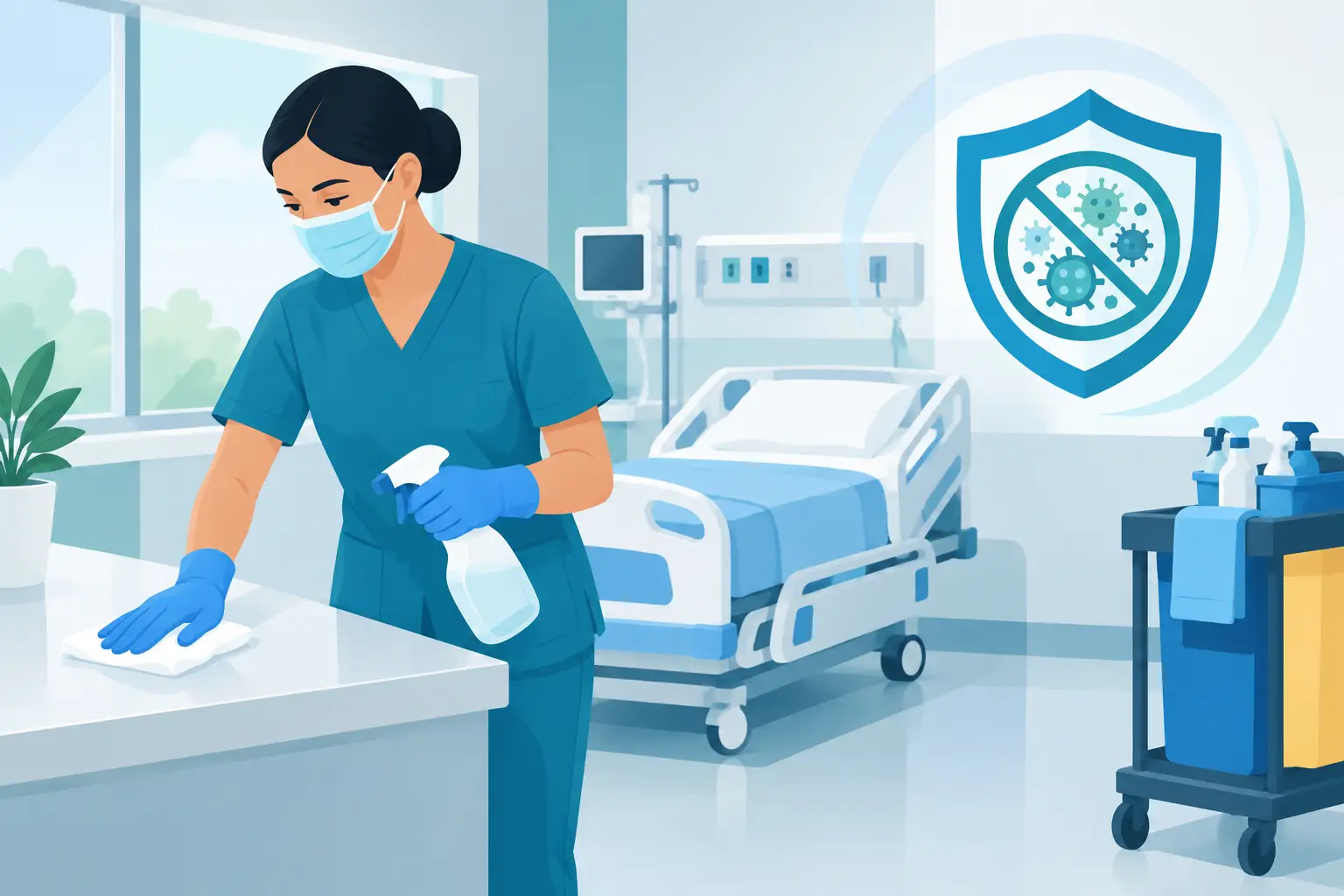
A waiting-room chair can look clean while carrying contamination from dozens of hands. A bathroom may smell fresh but still have missed touchpoints on taps, flush buttons, door hardware, and dispensers. That is why healthcare cleaning infection prevention is not simply about making a facility look presentable. It is a disciplined process that reduces the chance of germs moving between people, rooms, and surfaces.
For healthcare facilities, retirement-care communities, clinics, dental offices, and treatment rooms, cleaning affects more than first impressions. Patients and residents may be vulnerable to infection, staff work under pressure, and visitors expect an environment that feels safe from the moment they arrive. A dependable cleaning program brings together trained people, clear routines, appropriate products, and checks that confirm the work has been completed properly.
Healthcare Cleaning Infection Prevention Starts With the Right Sequence
Cleaning and disinfecting are related, but they are not the same job. Cleaning removes visible soil, dust, spills, and organic material. Disinfecting uses an approved product for the required contact time to reduce germs on a cleaned surface. When a surface is dirty, applying disinfectant straight over it can limit the product’s effectiveness.
The usual sequence is simple: remove waste and soiling, clean the surface, then disinfect the areas that require it. The details matter. A cleaner needs to use enough product to keep the surface wet for the time stated on the label, rather than spraying and immediately wiping it dry. Staff also need clean cloths and mop heads so contamination is not carried from one room to the next.
Not every surface needs the same treatment at the same frequency. Floors in a quiet administrative office have different needs from an exam room, reception counter, restroom, or patient bathroom. The goal is not to use the strongest product everywhere. It is to use the correct method for the surface, the setting, and the level of risk.
Focus on the Surfaces People Touch Most
High-touch points should be the backbone of a healthcare cleaning schedule. These are the places that hands touch repeatedly throughout the day, often without anyone noticing. Door handles, light switches, handrails, elevator buttons, reception desks, chair arms, shared keyboards, phones, faucet handles, and restroom fixtures all deserve attention.
A practical program identifies these points room by room instead of relying on a general instruction to “disinfect surfaces.” That wording leaves too much to interpretation. A detailed room checklist makes expectations visible, supports consistent service across shifts, and helps a facility manager see whether cleaning effort matches how people actually use the space.
Frequency depends on traffic and function. A public reception counter may need attention several times during operating hours, while a low-use storage room may be scheduled less often. During periods of increased illness, a facility may need to increase cleaning of shared areas, waiting rooms, staff break rooms, and restrooms. Flexibility is valuable, but it should be guided by a clear plan rather than a last-minute response.
Prevent Cross-Contamination Between Rooms
One missed step can undo careful work elsewhere. Reusing the same cloth in a restroom and then on a reception desk, or taking a soiled mop head into a clean treatment area, creates an avoidable cross-contamination risk.
Color-coded cleaning materials can help teams keep equipment assigned to the right zones. For example, one color may be used for restrooms, another for clinical or treatment spaces, and another for general public areas. Used materials should be separated, laundered or replaced correctly, and stored so clean supplies remain clean.
Work flow matters as well. Teams should generally move from cleaner areas to dirtier areas and from higher surfaces down to floors. Waste removal, restroom service, and spill response need their own defined procedures. A cleaning company should also understand when an area needs to be isolated or when facility staff must take the lead under a specific infection-control protocol.
Train for Detail, Not Just Speed
A cleaner can complete a room quickly and still miss the points that matter most. Good healthcare cleaning depends on training that explains why each task is performed, not just a list of tasks to complete. When teams understand transmission risks, contact times, hand hygiene, personal protective equipment, and safe chemical handling, they are better prepared to work carefully and consistently.
Training should cover the physical realities of the facility. Different floor finishes react differently to chemicals and moisture. Upholstered waiting-room seating, privacy curtains, glass partitions, sinks, and medical-adjacent equipment all require appropriate methods. Harsh products can damage finishes, while underpowered methods may leave hygiene concerns unresolved.
Eco-conscious cleaning can be part of the plan, but it should never mean compromising infection-control requirements. Lower-impact products and sensible dosing can reduce unnecessary chemical exposure in suitable areas. In clinical and high-risk zones, the selected disinfectant must still meet the facility’s needs and be used exactly as directed. The best choice depends on the surface, the required level of disinfection, occupancy, ventilation, and the facility’s own policies.
Clear Responsibilities Keep Standards Consistent
Cleaning providers and facility teams need to agree on who handles what. A professional crew may manage scheduled cleaning, restrooms, floors, common areas, waste, and high-touch disinfection. Clinical staff may remain responsible for specialized equipment, sterile zones, or immediate cleaning tasks between patients. Confusion creates gaps, so responsibilities should be documented before service begins.
The schedule should also account for practical operations. Busy clinics may need early-morning, evening, or weekend service, while a retirement-care setting may need quiet cleaning approaches that minimize disruption to residents. Reliable arrival times and responsive communication are part of infection prevention because delayed service can leave high-use areas unattended when they need attention most.
Build Quality Checks Into the Cleaning Program
Healthcare facilities should not have to guess whether a space was cleaned to standard. Routine inspections turn expectations into accountable results. A supervisor can check completed areas, verify that high-touch points have been addressed, look for dust buildup or floor residue, and confirm that supplies are stocked and waste is handled properly.
Visual inspections are valuable, but they have limits. A shiny surface does not prove a disinfectant was used with the required contact time. For higher-risk settings, facilities may choose additional monitoring methods based on their internal requirements. What matters is having a process for identifying misses, correcting them promptly, and improving the routine rather than treating every issue as a one-off complaint.
Documentation also supports continuity. Shift logs, checklists, incident records, and supply records make it easier to manage changing staffing levels and increased cleaning demands. They give facility managers a clear reference point when evaluating service quality or adjusting a cleaning scope.
Plan for Spills and Increased Infection Risk
Every healthcare setting should know what happens when normal cleaning is not enough. Bodily-fluid spills, a confirmed infectious illness, water damage, or a sudden rise in seasonal illness can require a different response. Staff should know who to notify, how to restrict access if needed, what protective equipment is required, and when specialist cleaning procedures apply.
Preparation prevents rushed decisions. Keep spill kits accessible, maintain adequate stock of approved products and disposable materials, and make escalation contacts clear. A cleaning partner should be able to adapt the schedule and provide additional support when the facility’s risk level changes, while working within site-specific directions.
Choose a Cleaning Partner That Understands Healthcare Spaces
The right provider does more than empty bins and mop floors. Look for a team that asks practical questions about room use, traffic patterns, floor types, operating hours, touchpoints, waste processes, and existing infection-control procedures. Those questions show that the provider is building a plan for the facility rather than applying the same routine to every building.
Eco Smart Cleaning approaches healthcare and high-traffic facilities with detailed standards, professional equipment, flexible scheduling, and a focus on visible cleanliness as well as hygiene support. The right scope may include recurring common-area cleaning, restroom care, floor maintenance, carpet cleaning, upholstery care, window cleaning, and targeted deep cleaning when the facility needs extra attention.
A clean healthcare environment is built one careful action at a time: a fresh cloth for the next room, a disinfectant left on long enough to work, a handrail checked after a busy period, and a team that arrives when promised. Those small disciplines help patients, residents, staff, and visitors feel cared for every day.


 +64 021 480 489