
The condition of a school is visible before the first bell rings. Smudged glass, sticky desks, overflowing restrooms, and marked floors affect how students, families, and staff feel about the space. More importantly, inconsistent hygiene routines can allow everyday germs to move quickly through crowded classrooms and shared areas. Effective school cleaning disinfection protocols give administrators a practical way to keep facilities fresh, safe, and ready for learning.
Cleaning and disinfecting are related, but they are not the same job. A dependable program recognizes that difference, assigns work by risk and traffic level, and gives cleaning teams enough time to do the work properly. The result is not just a better-looking building. It is a cleaner, more comfortable environment that supports students, educators, and visitors every day.
Start With the Difference Between Cleaning and Disinfecting
Cleaning removes visible soil, dust, crumbs, spills, and many germs from a surface. It is the foundation of every effective hygiene program. Disinfecting uses an appropriate product to reduce germs on a cleaned hard surface, following the product label for dilution and contact time.
Skipping the cleaning step is a common mistake. Dirt and residue can prevent a disinfectant from reaching the surface evenly. A desk covered in pencil marks, food residue, or dried spills should be cleaned first, then disinfected when the situation and surface call for it.
Not every surface needs heavy disinfection throughout the day. Overusing chemicals can create unnecessary odors, leave residue, and place more wear on sensitive finishes. The right approach is targeted: clean high-use spaces thoroughly, disinfect priority touchpoints and areas affected by illness, and use products that suit the surface and the school’s safety requirements.
Build School Cleaning Disinfection Protocols Around Risk
A school has many different environments under one roof. A kindergarten classroom, science lab, cafeteria, gym locker room, front office, and staff restroom should not all receive the same service schedule. Traffic, surface type, food handling, moisture, age group, and known illness concerns all affect the right cleaning plan.
High-touch points deserve close attention because many hands use them throughout the day. These include door handles, handrails, light switches, drinking fountain controls, desk edges, shared keyboards, copier buttons, restroom fixtures, lunch tables, and sports equipment. These surfaces should be cleaned on a defined schedule, with extra service during periods of high absenteeism or after a known contamination incident.
Restrooms, nurse’s offices, cafeterias, and locker rooms usually require the most frequent attention. They combine high use with moisture, bodily fluids, food waste, or close contact. Classrooms may need a different rhythm: daily floor care and waste removal, regular touchpoint cleaning, and scheduled detailed cleaning of desks, chairs, storage areas, and shared learning materials.
A written schedule makes these decisions consistent. It should state what is cleaned, how often it is serviced, which products and equipment are used, and who confirms completion. This protects standards when staffing changes or when a school is managing a busy event calendar.
Create a Practical Daily Routine
Daily cleaning should keep the school orderly while addressing the places students and staff use most. The goal is to prevent buildup rather than allowing dirt and germs to accumulate until a deep clean is needed.
A typical daily routine may include emptying waste and replacing liners, cleaning and disinfecting restrooms, wiping priority touchpoints, cleaning lunch areas, vacuuming or mopping floors, removing visible marks from entry glass, and resetting common spaces. Floors deserve particular care. Wet entrances, food spills, and bathroom moisture can quickly become slip hazards, while grit tracked in from outside can scratch hard floors and wear down carpet fibers.
Timing matters as much as task selection. Some work is best completed after school, when classrooms are empty and cleaners can reach every surface without disrupting learning. Other tasks, including restroom checks, spill response, and lunchroom touchpoint cleaning, need daytime coverage. A flexible schedule is often more effective than trying to complete every task during one evening shift.
Use Products and Equipment With Care
Schools need cleaning products that are effective, clearly labeled, and used exactly as directed. A disinfectant only performs as intended when it is mixed correctly, applied to a compatible surface, and left wet for the required contact time. Wiping it away too soon can reduce its effectiveness.
Choose solutions with student and staff wellbeing in mind. Low-odor and environmentally considerate products can be a sensible choice for classrooms, offices, and enclosed spaces, provided they meet the required cleaning or disinfection purpose. Eco-friendly does not mean using less care. Products still need to be stored securely, labeled properly, and kept away from students.
Professional equipment also makes a visible difference. HEPA-filter vacuums can help manage fine dust and allergens in carpeted areas. Microfiber cloths capture soil efficiently when changed regularly between rooms and tasks. Color-coded cloths and mop heads help prevent cross-contamination, such as using restroom equipment in a classroom or food area.
Cleaning staff should never mix products unless the manufacturer specifically directs it. Mixing chemicals can create harmful fumes or reduce performance. Good ventilation, gloves, appropriate protective equipment, and clear spill procedures are all part of a safe operation.
Respond Quickly to Spills and Illness Events
Routine cleaning is only one part of school hygiene. A reliable protocol also explains what happens when a student becomes sick, a bodily-fluid incident occurs, or a large spill creates a safety risk.
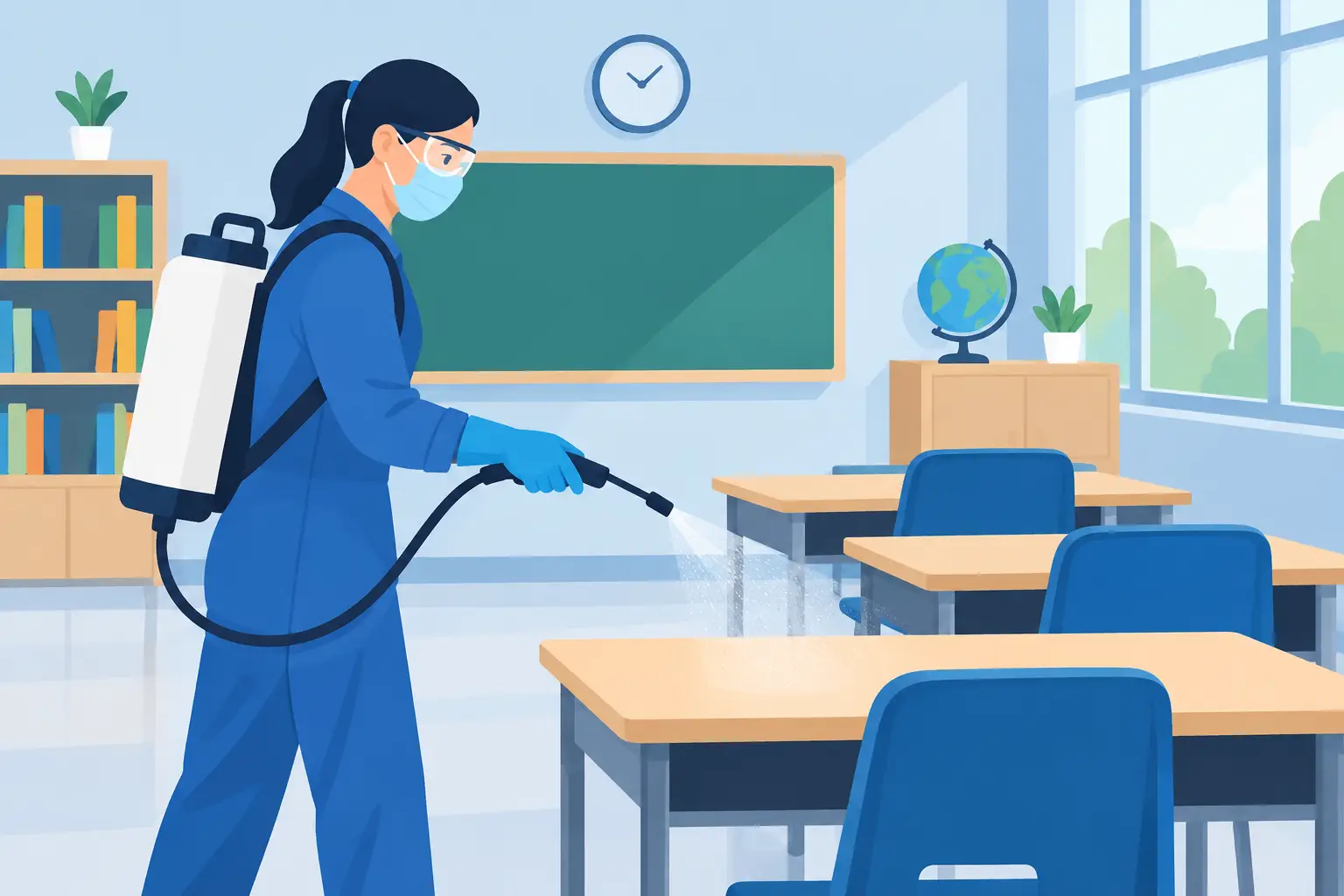
The affected area should be isolated where practical, cleaned by trained staff using suitable protective equipment, and disinfected according to the product instructions and the school’s established procedures. Contaminated materials must be handled and disposed of safely. Staff should know who to notify, what supplies to use, and when an area can return to normal use.
During periods of elevated illness, schools may increase cleaning frequency in restrooms, cafeterias, front offices, and high-touch common areas. However, more cleaning should still be purposeful. A targeted response based on actual traffic, illness reports, and facility needs is more effective than simply spraying every surface more often.
Protect Floors, Carpets, and Shared Spaces
A clean school also depends on the surfaces that carry the most daily wear. Carpets trap dust, soil, and allergens, especially around entrances, hallways, libraries, and classrooms. Regular vacuuming helps, but periodic professional carpet cleaning is needed to remove embedded soil and maintain appearance.
Hard floors need the same level of planning. Incorrect chemicals, overly wet mopping, and abrasive equipment can dull finishes or create slippery conditions. Entrance matting, prompt spot cleaning, regular sweeping, and appropriate floor maintenance reduce damage and help preserve the investment in the building.
Gym floors, auditoriums, cafeterias, and multipurpose rooms require special attention because their use changes throughout the day. A floor that is safe for a morning assembly may need immediate cleaning after lunch, a sports practice, or an evening community event. Flexible service helps schools maintain a professional first impression without interrupting their core activities.
Train Staff and Keep Clear Records
Even the best written protocol will fail if people are unsure how to follow it. Training should cover cleaning versus disinfecting, safe chemical use, equipment care, cross-contamination prevention, spill response, and reporting concerns. It should also explain why certain tasks matter, since a team that understands the standard is more likely to maintain it.
Simple checklists and service logs make quality easier to manage. Supervisors can confirm that restrooms were serviced, high-touch points were addressed, supplies were restocked, and any issues were reported. Records are especially useful for large campuses, shared facilities, and schools working with an outside cleaning provider.
Regular inspections should look beyond whether a room appears tidy. Check corners, baseboards, restroom fixtures, floor edges, entry glass, odors, supply levels, and the condition of frequently touched surfaces. Feedback from teachers and office staff can also reveal problems that a nightly walkthrough may miss.
A professional cleaning partner can help turn these standards into a dependable routine. Eco Smart Cleaning supports facilities that need consistent schedules, detailed surface care, and cleaning plans matched to the way their spaces are actually used.
A school does not need a complicated system to maintain high standards. It needs clear responsibilities, suitable products, trained people, and enough time to do each task properly. When those pieces are in place, students and staff walk into spaces that feel cared for, fresh, and ready for the work ahead.


 +64 021 480 489