
A busy gym can look clean at a glance while still carrying the evidence of a full day of training: handprints on machine controls, sweat on benches, chalk dust around racks, and grime building up in places members never see. Consistent gym equipment cleaning and disinfection helps protect members, support staff, and the professional standard your facility promises from the moment someone walks in.
For gym owners and facility managers, the goal is not to make every surface smell strongly scented. It is to remove soil effectively, reduce hygiene risks, protect valuable equipment, and keep the space visibly fresh throughout the day. That takes more than a spray bottle at the front desk.
Cleaning and disinfection are different jobs
Cleaning removes visible dirt, sweat residue, body oils, dust, and other soil from a surface. Disinfection uses a suitable product, applied correctly, to reduce germs on a cleaned surface. One does not replace the other.
If a treadmill handrail or bench is visibly dirty, applying disinfectant directly over the buildup may not deliver the intended result. The product can struggle to reach the surface beneath the soil, and residue may remain for the next user. Start by cleaning, then disinfect where required according to the product label.
This distinction matters in high-use fitness spaces. Members touch adjustment levers, dumbbells, mats, handles, locker doors, faucets, and touchscreens repeatedly. A routine that addresses both appearance and hygiene gives people more confidence in the facility.
Build gym equipment cleaning and disinfection into the day
A reliable program has several layers. The exact frequency depends on foot traffic, class schedules, the type of equipment, and whether the gym serves a higher-risk population. A small studio with scheduled classes needs a different approach from a 24-hour fitness center with constant member turnover.
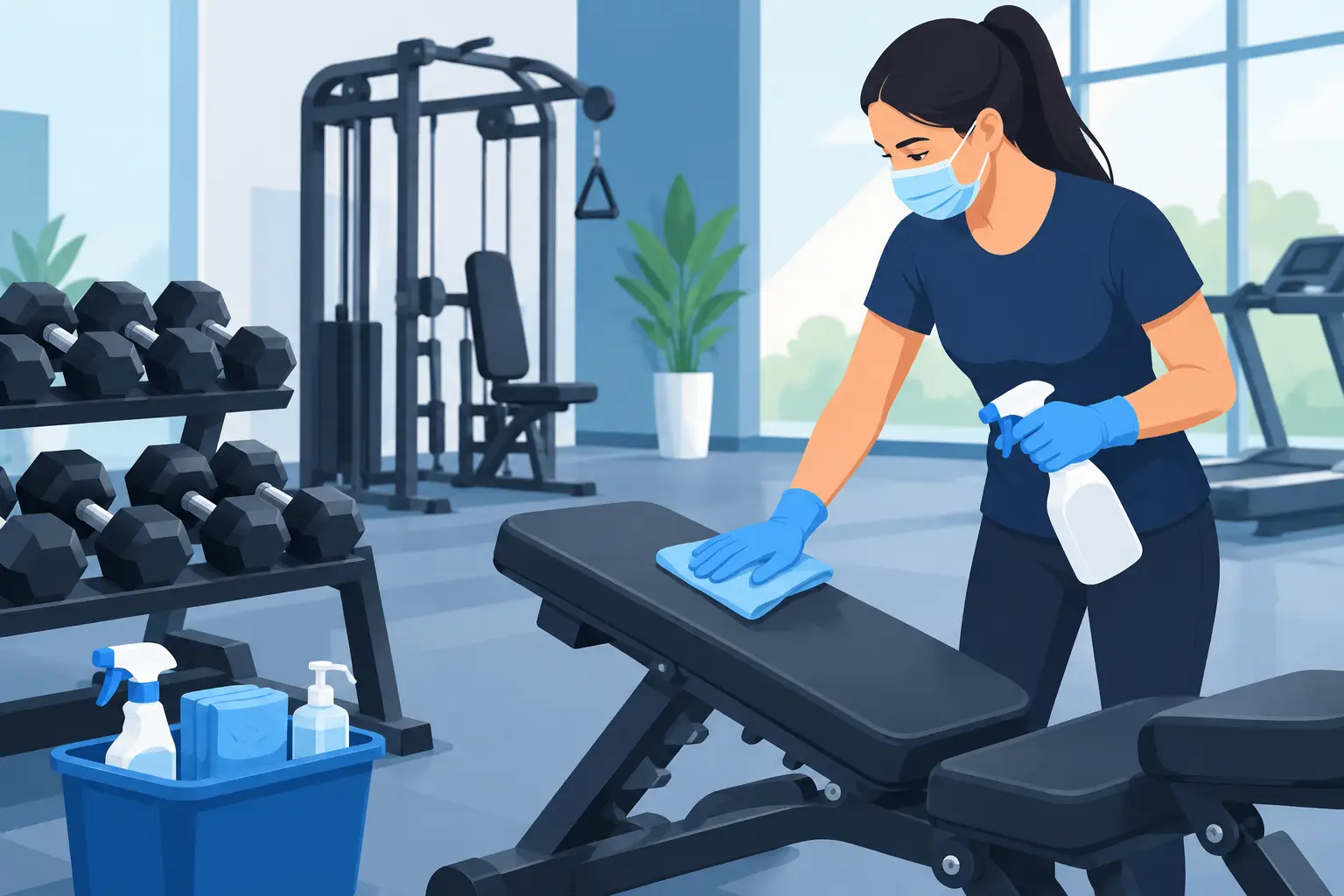
During operating hours, staff should carry out quick, focused cleaning of high-touch areas. This includes cardio-machine handles and controls, cable attachments, free weights, benches, resistance machines, doors, water stations, restroom touchpoints, and reception counters. Wipes or correctly prepared products can be practical for these rounds, provided they are appropriate for the surface and used as directed.
Members can help, but member wipe-downs should not be the whole plan. People are often in a hurry, may miss contact points, or may not allow enough product contact time. Staff cleaning provides the accountability and consistency that a professional environment requires.
At the end of the day, allow time for a fuller clean. Floors need attention around and underneath equipment, mirrors need streak-free cleaning, trash and used wipe stations need servicing, and less obvious touchpoints need to be included. Weekly and periodic deep cleaning can then address vents, upholstery seams, rubber flooring edges, storage areas, lockers, and accumulated dust on frames and ledges.
Start with the surfaces members touch most
High-touch points should be the priority because they are shared constantly. In most facilities, these include:
- Treadmill rails, buttons, screens, and safety clips
- Bike handlebars, seats, resistance controls, and adjustment pins
- Dumbbells, kettlebells, barbells, plates, and storage racks
- Benches, machine pads, grips, cables, and selector pins
- Mats, stretch-zone equipment, balance tools, and foam rollers
- Door handles, locker hardware, bathroom fixtures, and payment terminals
Do not overlook areas that get frequent contact but little attention. The underside of a bench handle, the pull pin on a weight stack, a fan control, and the edge of a touchscreen can all collect residue. A detailed cleaning checklist prevents these points from being missed when the facility is busy.
Use products that suit the equipment
Fitness equipment includes metal, vinyl, rubber, plastic, coated surfaces, touchscreens, and electronic controls. A product that works well on a restroom fixture may damage a machine console, dry out upholstery, or leave a slippery film on a rubber floor.
Always follow the manufacturer guidance for equipment and the label directions for the cleaning or disinfecting product. Pay close attention to dilution ratios, required contact time, ventilation requirements, and whether wiping or rinsing is needed after application. More product is not automatically better. Overuse can leave residue, affect grip, and shorten the life of surfaces.
For screens and electronics, use a method designed for sensitive components. Avoid spraying liquid directly into controls, ports, or display edges. Apply the product to a clean cloth when appropriate, then wipe carefully without soaking the surface.
Eco-conscious products can be a strong choice when they are selected for the task and used properly. The best approach balances effective hygiene standards with member comfort, surface protection, and responsible product use. Fragrance alone is not proof of cleanliness, and harsh chemicals are not always the answer.
Floors need their own cleaning plan
Gym floors take a beating. They collect sweat, dust, chalk, outdoor debris, spilled drinks, and residue from cleaning products. They also influence safety. A dirty or poorly maintained floor can become slippery, look worn before its time, and create an unfavorable first impression.
Rubber flooring needs routine vacuuming or dry soil removal before damp cleaning. This prevents grit from being pushed across the surface. Use a compatible cleaner at the correct dilution, and avoid leaving excess moisture around seams or under equipment. Wood, vinyl, carpeted areas, and tile all require different methods, so a one-product approach is rarely suitable across the whole gym.
A professional floor-care schedule can also protect the investment in your facility. Regular attention helps prevent embedded grime and reduces the need for aggressive restoration work later. In entry areas, place and maintain mats that capture dirt before it travels into training zones.
Pay attention to mats, upholstery, and shared accessories
Yoga mats, exercise mats, foam rollers, medicine balls, resistance bands, and similar shared items need more than an occasional surface wipe. Their texture and frequent skin contact make them easy to overlook and difficult to clean well if residue is allowed to build up.
Inspect these items regularly for cracks, peeling surfaces, tears, or odors that do not resolve with cleaning. Damaged equipment can be harder to sanitize and may need replacement. Upholstered benches and pads should also be checked for splits in vinyl, especially along seams and corners where moisture can enter.
Laundry deserves the same discipline. Towels, cleaning cloths, and mop heads can spread soil if they are not changed, washed, and dried properly. Use color-coded cloths or a clear system to prevent restroom materials from being used in workout or reception areas.
Train staff and make the standard visible
Even the best cleaning products cannot compensate for unclear instructions. Staff should know what to clean, how often to clean it, which product belongs on each surface, and what to do when equipment is heavily soiled or damaged.
A simple documented schedule creates consistency across shifts. Assign responsibilities, record completed tasks, and review the routine when membership, operating hours, or facility layout changes. Managers should also carry out regular spot checks. These are not about blaming staff. They are about maintaining the standard members expect.
Visible cleaning also reassures people. When staff clean high-touch areas during the day, refill wipe stations, and promptly deal with spills, members see that hygiene is part of how the gym operates. Clear signage can encourage members to wipe equipment after use, but it should support a professional cleaning program rather than replace one.
When professional support makes sense
In-house teams are well placed to manage regular touchpoint cleaning and immediate spill response. However, periodic specialist cleaning can make a clear difference in high-traffic areas, large facilities, and spaces with complex flooring or heavy equipment layouts.
Professional cleaners can help with detailed floor care, hard-to-reach dust removal, restroom sanitation, upholstery cleaning, and scheduled deep cleans that are difficult to complete during normal operating hours. Flexible scheduling matters here. Cleaning should fit around peak classes, early openings, and member access without disrupting the gym experience.
Eco Smart Cleaning supports commercial facilities with cleaning plans matched to the site, its surfaces, and its operating schedule. The right plan gives managers a dependable standard without asking front-desk or training staff to carry the full burden of specialist cleaning.
A clean gym is not defined by a quick spray between sessions. It is built through practical routines, suitable products, careful attention to surfaces, and a team that treats every member touchpoint as part of the experience. When that standard is maintained day after day, members notice – and they are more likely to return to a space that feels cared for.


 +64 021 480 489