
A carpet can look acceptable from across the room while holding weeks of tracked-in soil, food crumbs, moisture, allergens, and stains below the surface. In busy workplaces, commercial carpet cleaning is not simply about making floors look better for visitors. It is a practical part of maintaining a healthier, safer, and more professional facility.
For offices, schools, restaurants, healthcare spaces, gyms, and retirement-care facilities, carpet condition sends a clear message. Clean, fresh flooring supports a professional first impression and gives employees, customers, students, and residents more confidence in the space. Regular care also helps protect an expensive flooring asset from premature wear.
Why Commercial Carpets Need More Than Vacuuming
Routine vacuuming matters, especially in entrances, hallways, reception areas, and other high-traffic zones. It removes loose debris before it is ground deeper into the carpet. But vacuuming alone cannot remove the oily residue, fine grit, spills, and embedded soil that gradually dull carpet fibers.
Every footstep pushes abrasive particles further into the pile. Over time, those particles can wear down fibers, flatten the carpet’s texture, and leave traffic lanes looking gray or discolored. A quick spot treatment may improve a visible spill, but it will not address the buildup beneath the surface.
Professional cleaning uses commercial-grade equipment and methods designed to lift soil more thoroughly. The right approach can refresh the appearance of the carpet, reduce lingering odors, and help maintain a more hygienic environment without disrupting normal operations unnecessarily.
The Business Impact of Clean Carpets
Floors cover a large part of any commercial space, so they are noticed quickly. A stained reception carpet, sticky restaurant floor edge, or musty meeting room can affect how people judge the care taken across the rest of the building.
For customer-facing businesses, carpet care supports the presentation of the brand. For workplaces, it helps create a more comfortable setting for staff and visitors. In schools, healthcare environments, and retirement-care settings, consistent cleaning is also closely connected to hygiene expectations and the need for dependable facility standards.
There is an asset-management benefit as well. Replacing commercial carpet is disruptive and costly. Regular cleaning helps remove the abrasive soil that shortens carpet life, making it easier to keep flooring looking presentable for longer. The result is often a better balance between maintenance spending now and replacement costs later.
How Often Should Commercial Carpet Cleaning Be Scheduled?
There is no single schedule that suits every facility. The right frequency depends on foot traffic, carpet color and type, weather conditions, the activities taking place in the space, and how quickly spills are addressed.
An office with a small team may need a full professional clean once or twice a year, with more frequent attention in the entryway and shared meeting areas. A busy restaurant, gym, school, or medical facility may require more regular carpet maintenance because of heavier daily traffic, food and drink spills, moisture, and higher hygiene expectations.
Properties near the coast can also experience extra sand, moisture, and outdoor debris. Those conditions make entry matting, frequent vacuuming, and planned professional cleaning particularly valuable. Waiting until the carpet looks heavily soiled usually means dirt has already had time to settle into the fibers.
A practical maintenance plan often combines regular vacuuming, prompt spot treatment, periodic cleaning of high-traffic lanes, and scheduled deep cleaning for the wider carpeted area. This approach keeps standards consistent rather than relying on a large restoration job only when the carpet becomes visibly worn.
Choosing the Right Cleaning Method
Commercial carpet cleaning is not a one-method service. The best method depends on carpet construction, the type of soil present, the level of staining, and how quickly the area needs to return to use.
Hot Water Extraction for Deep Soil Removal
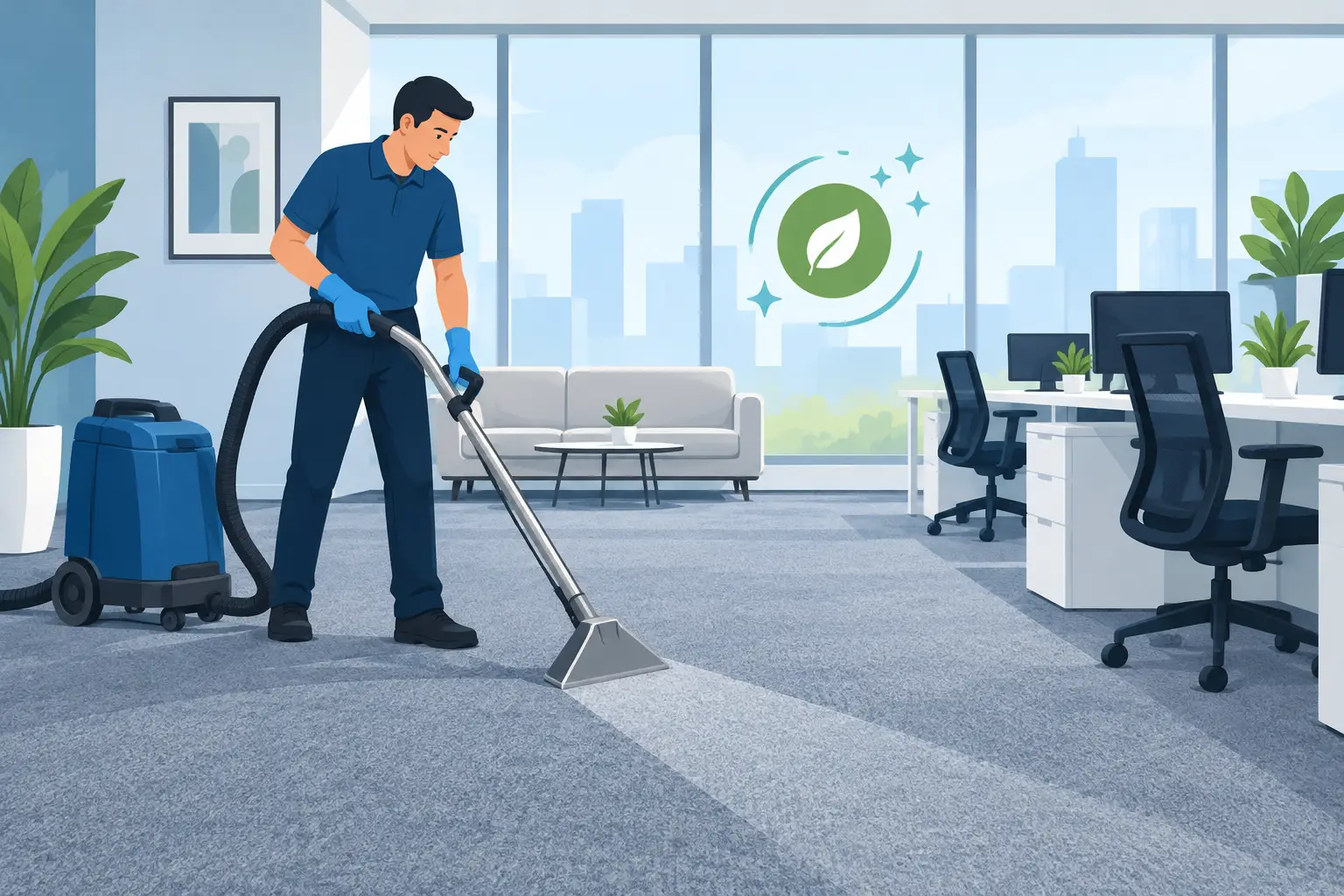
Hot water extraction is commonly used when carpets need a thorough clean. It works by applying cleaning solution and water, agitating soil where needed, then extracting moisture and loosened debris with professional equipment. It is particularly useful for carpets with built-up dirt, tracked-in grime, and general dullness.
Drying time needs to be considered. A professional team can help reduce downtime through proper extraction, ventilation advice, and scheduling work outside peak business hours where possible. For facilities that operate continuously, cleaning can often be arranged in sections to keep essential areas accessible.
Low-Moisture Cleaning for Faster Return to Use
Low-moisture methods can be a sensible choice for spaces that cannot tolerate extended drying times. Depending on the carpet and cleaning requirement, these methods can refresh the surface and remove soil with less moisture.
The trade-off is that low-moisture cleaning may not always be the best answer for heavily soiled carpets or deep stains. A reliable provider will assess the carpet rather than treating every floor with the same process.
Spot and Stain Treatment
Coffee, ink, food, grease, mud, and drink spills all behave differently in carpet. Using the wrong product or scrubbing too aggressively can spread the stain, damage fibers, or leave residue that attracts more soil later.
Fast action helps. Blot a fresh spill with a clean, absorbent cloth, working from the outside toward the center. Avoid soaking the area or using harsh household chemicals without checking whether they are suitable for the carpet. For stubborn staining, professional treatment is often the safer option.
What to Look for in a Commercial Carpet Cleaning Provider
A cleaning contractor should do more than arrive with a machine. They should understand the purpose of the space, the condition of the carpet, the access requirements, and the level of disruption the business can accommodate.
Look for a provider that can clearly explain the recommended method, provide straightforward pricing, and work around your schedule. Punctuality matters when cleaning needs to happen before opening, after closing, or between shifts. So does attention to detail, including corners, edges, traffic lanes, and areas beneath movable furniture where agreed.
Eco-conscious product choices are another useful consideration. Products should be appropriate for the carpet, effective against soil, and selected with the people using the facility in mind. This is especially relevant for healthcare settings, schools, childcare environments, and spaces where odors or residues can be a concern.
At Eco Smart Cleaning, commercial carpet care is planned around the facility, not forced into a one-size-fits-all package. That means considering your carpet type, traffic patterns, hygiene requirements, operating hours, and the result you need from the service.
Preparing Your Space for a Better Result
Simple preparation helps a carpet-cleaning visit run efficiently. Let staff know when work is scheduled, clear small personal items from the floor, and identify any stains or problem areas that need special attention. If heavy furniture must be moved, confirm this in advance so responsibilities are clear.
It is also helpful to keep foot traffic off freshly cleaned carpet until it is dry. If an area must remain open, ask about cleaning it in stages or choosing a lower-moisture option. Setting these expectations before the appointment helps protect the result and minimizes inconvenience for your team.
Clean carpets do not have to be an afterthought or an emergency response to visible stains. A well-timed service plan keeps floors fresh and spotless, supports a professional first impression, and lets your staff focus on the work that matters most.


 +64 021 480 489