
A carpet can look clean from across the room while holding tracked-in grit, food residue, pet dander, and odors deep in its fibers. Eco friendly carpet cleaning is not simply about choosing a product with a green label. It is a careful process that removes buildup effectively while using safer solutions, appropriate equipment, and moisture control that protects your home or workplace.
For homeowners, tenants, landlords, and facility managers, the goal is the same: fresh, spotless carpets that support a healthier, more presentable space without leaving behind harsh chemical smells or unnecessary residue.
What Eco Friendly Carpet Cleaning Should Deliver
A responsible carpet-cleaning service should balance cleaning power with surface care. Carpets need more than a light deodorizer or a quick pass over visible marks. Soil settles below the pile, where it can gradually dull the carpet, create odors, and wear down fibers each time people walk across it.
Effective eco friendly carpet cleaning starts with an assessment. The cleaner should consider the carpet material, level of traffic, type of stain, previous treatments, and whether children, pets, customers, staff, or sensitive individuals use the space. A wool carpet, for example, needs a different approach from synthetic office carpet tiles. Using the wrong solution or too much water can cause more problems than it solves.
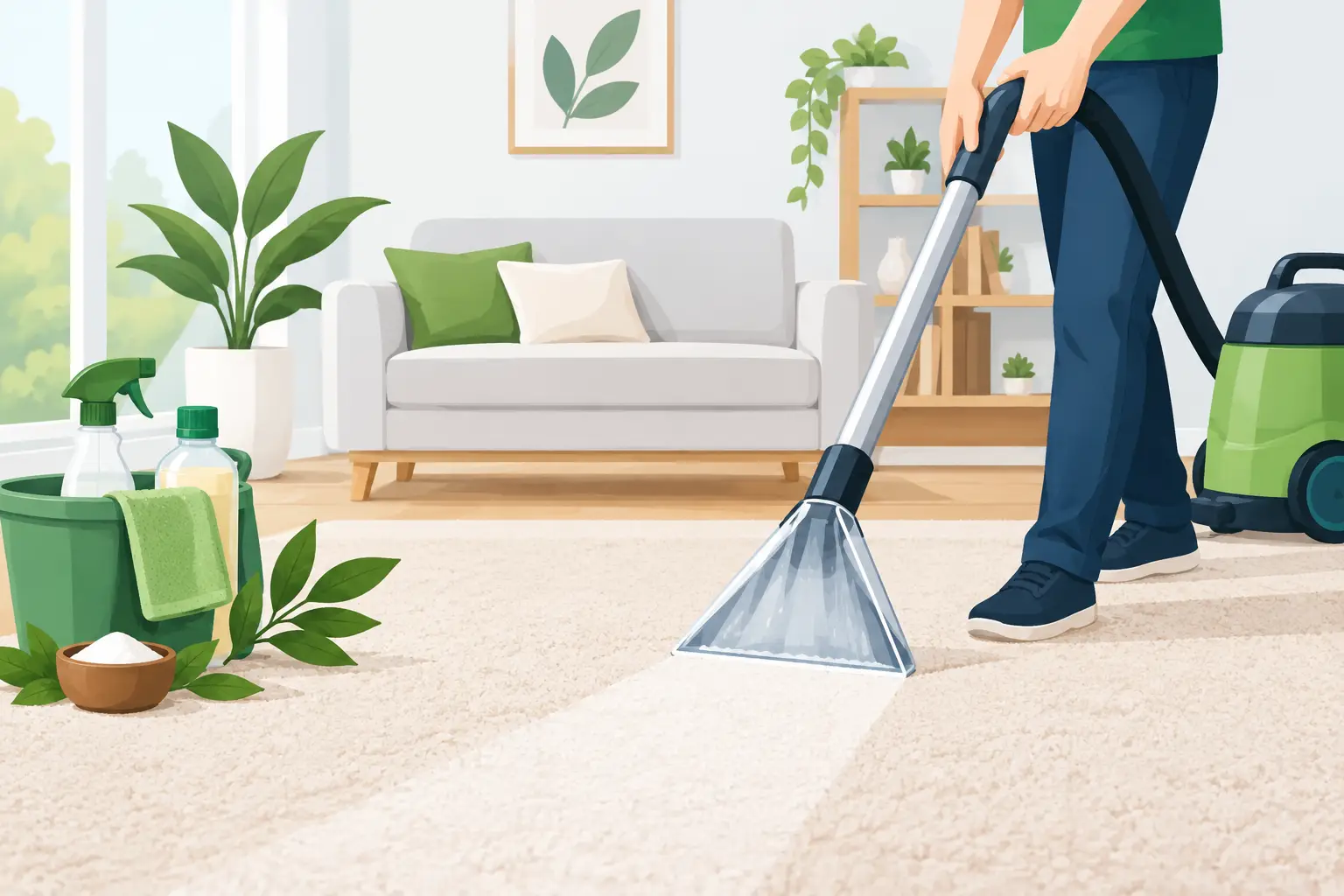
The right process combines lower-impact cleaning products with professional extraction or low-moisture methods. The aim is to lift soil from the fibers, not push it deeper or leave a sticky film that attracts dirt soon after cleaning.
Safer Products Matter, but Technique Matters Too
Many people associate green cleaning with gentle products that do not quite get the job done. That does not have to be the trade-off. Professional-grade, environmentally conscious products can be highly effective when they are matched to the stain and used at the correct dilution.
The key is avoiding unnecessary chemicals and residues. Strong fragrances may make a room smell freshly cleaned for a few hours, but fragrance is not proof that the carpet is hygienic. In some homes and workplaces, heavily scented products can be uncomfortable for people with allergies, asthma, or fragrance sensitivities.
A thoughtful cleaning approach focuses on removing the source of the odor or stain. Pet accidents, for instance, may require targeted treatment before extraction. Coffee, wine, makeup, and grease each respond differently. Treating every mark with the same heavy-duty spot cleaner can damage fibers, set a stain, or leave a noticeable patch.
Professional cleaners also use agitation, extraction, and controlled rinsing to improve results. Those steps allow a cleaner to use products efficiently rather than relying on excess chemical strength. It is a more detailed approach, and it is usually better for the carpet over time.
Moisture Control Protects Your Carpet
Too much water is one of the most common carpet-cleaning mistakes. Saturated carpet can take a long time to dry, particularly in cool or humid conditions. That creates inconvenience at home and disruption in busy commercial spaces. It may also lead to musty odors if moisture remains trapped in the backing or subfloor.
Professional equipment is designed to rinse and extract efficiently. Good extraction removes suspended soil along with as much moisture as possible, helping carpets dry faster and feel cleaner underfoot. Ventilation, room temperature, carpet thickness, and weather all affect drying time, so a dependable cleaner will give practical aftercare advice rather than promise the same result for every property.
In some situations, low-moisture cleaning is the more suitable option. It can work well for routine maintenance in offices, retail spaces, and other areas that need to return to use quickly. For heavily soiled carpets or deep odor issues, hot-water extraction may be the better choice. The right method depends on the condition of the carpet, not on a one-size-fits-all claim.
When Professional Cleaning Makes the Biggest Difference
Vacuuming is essential, but it only removes a portion of the dry soil near the surface. Fine grit, oils, and sticky residues can remain behind, especially in entryways, hallways, living rooms, break rooms, and work areas with regular foot traffic.
Professional cleaning is especially useful before moving out, preparing a rental for new occupants, recovering from a spill, or refreshing a home after a busy season. It can also help landlords and property managers protect the appearance and useful life of carpet between tenancies.
For businesses, clean carpet supports a professional first impression. Clients notice stained walkways, lingering odors, and flattened carpet in reception areas. Staff notice it too. Scheduled carpet care helps maintain a cleaner environment without waiting until the flooring looks neglected.
There are also hygiene considerations. Carpet can collect allergens, dust, and particles brought in from outside. Cleaning does not make a space sterile, nor should any company claim that it does. But thorough, regular carpet maintenance can reduce the buildup that contributes to a stale or dusty indoor environment.
How to Prepare for a Better Carpet-Cleaning Result
A few simple steps can help make a professional visit more efficient. Move smaller items, fragile décor, and anything stored on the floor where possible. Let the cleaning team know about specific stains, pet areas, old water damage, or concerns about color fading. The more accurate the information, the better the treatment plan.
After cleaning, allow the carpet adequate time to dry before replacing furniture or walking on it heavily. If furniture must be returned sooner, protective tabs or pads can help prevent marks or color transfer. Keep pets and children off damp carpet until it is dry, and maintain airflow by opening windows when conditions allow or using ventilation indoors.
It is also worth managing expectations around permanent stains. Some discoloration is not removable because it has altered the carpet dye, been heat-set, or sat untreated for too long. Bleach, paint, rust, and certain dyes can be particularly difficult. A skilled cleaner can improve many of these areas, but honest advice is more valuable than an unrealistic promise.
A Smarter Maintenance Plan for Homes and Workplaces
The best time to clean a carpet is before it reaches the point where traffic lanes look dark and fibers feel rough. Regular vacuuming, prompt spot treatment, and periodic professional cleaning work together to extend the life of the flooring.
Homes with pets, young children, or frequent guests may need more frequent service than a lightly used household. Restaurants, schools, healthcare settings, gyms, and offices may benefit from scheduled maintenance because their carpets face constant foot traffic and higher hygiene expectations. A tailored plan is often more cost-effective than waiting for a full restoration every time.
Eco Smart Cleaning approaches carpet care with this practical balance in mind: detailed cleaning standards, suitable equipment, and products selected to support a clean, comfortable environment. The priority is visible results without losing sight of the people who live, work, visit, and walk on the carpet every day.
A fresher carpet changes how a room feels. Whether you are preparing for a move, welcoming clients, or simply reclaiming a busy family living room, choose a cleaning method that treats both the fibers and the people around them with care.


 +64 021 480 489