
A cleaning decision can look simple until the person assigned to empty bins calls in sick, a carpet needs specialist treatment, or a high-traffic restroom falls below the standard customers expect. The choice between in house versus outsourced cleaning affects more than appearance. It shapes your daily workload, hygiene controls, budget predictability, and the condition of the surfaces you have invested in.
For a homeowner, the question may be whether regular professional help is worth the cost and coordination. For a business, school, healthcare setting, restaurant, or property manager, it is often a decision about accountability and consistency. Neither approach is automatically right. The best fit depends on the space, the level of cleaning required, and who has the capacity to manage the work properly.
In House Versus Outsourced Cleaning: The Core Difference
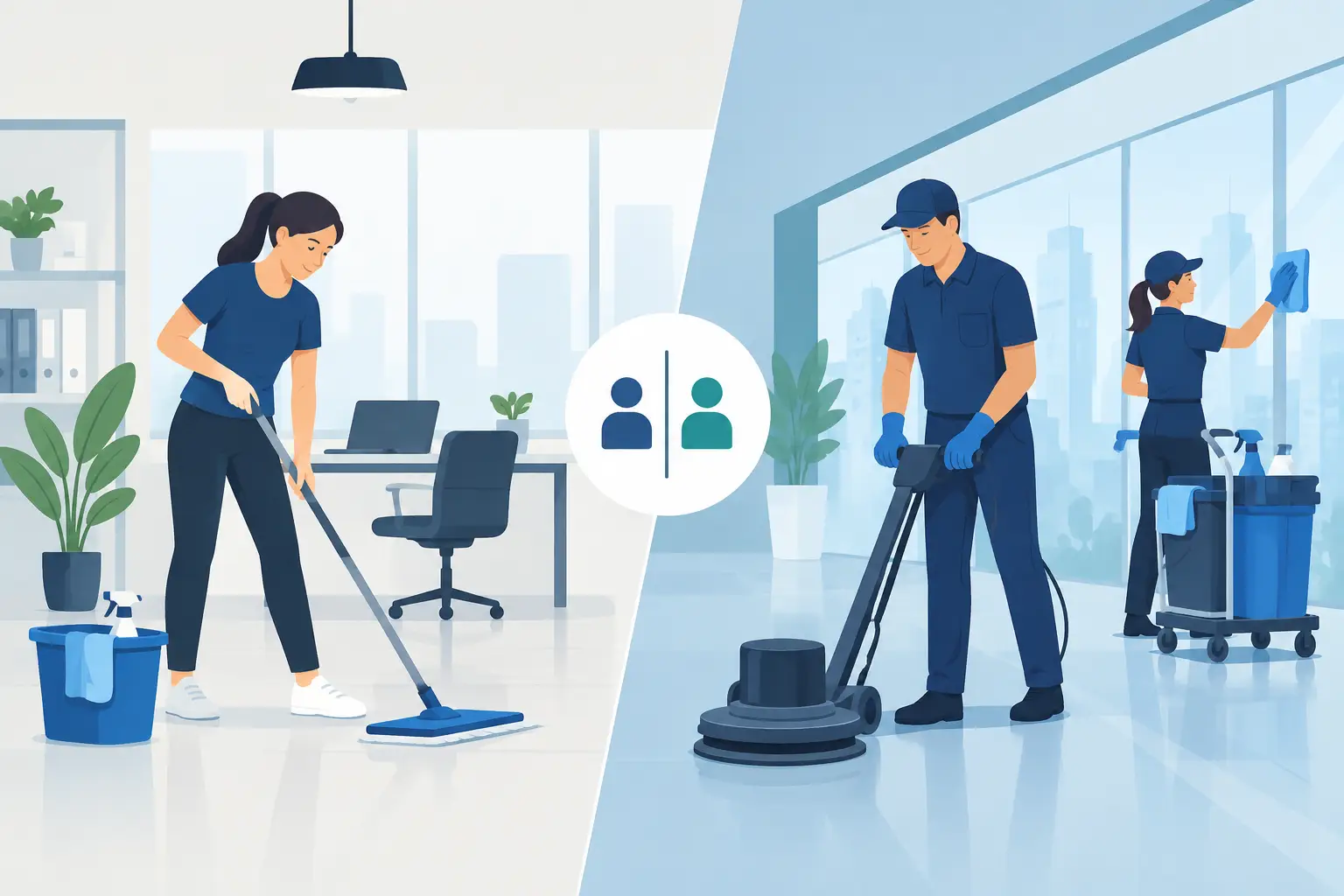
In-house cleaning means hiring employees directly and managing their schedules, training, supplies, equipment, payroll, and quality checks within your own household or organization. A business may have a dedicated janitorial team, while a homeowner may handle cleaning themselves or employ a regular private cleaner.
Outsourced cleaning means engaging a professional cleaning company to provide staff, supervision, products, equipment, and an agreed scope of work. The provider may visit on a routine schedule or be brought in for one-off work such as a move-out clean, post-construction cleaning, carpet restoration, upholstery cleaning, window cleaning, or floor polishing.
The distinction matters because the visible cost is only one part of the decision. Cleaning is a people-and-process service. The result depends on whether the right person arrives with enough time, suitable products, working equipment, clear standards, and someone responsible for following up if something is missed.
When In-House Cleaning Can Make Sense
Keeping cleaning in house can work well when the workload is steady, straightforward, and large enough to justify dedicated staff. A large facility with cleaning needs throughout the day may benefit from having team members immediately available to respond to spills, restock washrooms, and attend to urgent issues.
Direct control is another advantage. Managers can set priorities day by day, train staff around site-specific procedures, and adjust tasks quickly when an event, inspection, or busy period changes the schedule. In sensitive environments, such as some healthcare or secure facilities, direct employment may also suit internal access requirements.
For homeowners, handling routine cleaning personally can be practical when time is available and the home is already maintained. Regular attention to kitchens, bathrooms, dusting, and floors can prevent dirt from becoming a larger restoration job later.
However, in-house cleaning only works as well as the system behind it. Employees need training in safe chemical use, infection-control procedures where relevant, surface care, and equipment operation. Someone must order supplies, cover absences, inspect results, and address problems. Those responsibilities can quietly take time away from running a business, managing a property, or simply enjoying time at home.
The Hidden Costs of Managing Cleaning Internally
Labor is often the largest cost, but it is not the only one. Directly managing a cleaning function can involve recruitment, background checks, payroll, leave coverage, workers’ compensation, uniforms, insurance, onboarding, storage, machinery maintenance, and replacement stock. If a vacuum fails or a floor machine needs servicing, the responsibility stays with your team.
There is also the cost of inconsistency. When a small internal team is short-staffed, cleaning may be reduced to the most obvious tasks. Floors may be vacuumed, but corners, fixtures, touchpoints, baseboards, vents, carpets, and glass may receive less attention. Over time, that can affect hygiene, presentation, and the life of flooring and furnishings.
Why Organizations Outsource Cleaning
Outsourcing is often chosen because it transfers the operational burden to a provider whose core job is cleaning. A professional team brings established checklists, trained cleaners, commercial-grade equipment, and products selected for particular surfaces and hygiene needs.
For businesses, the major benefit is dependable coverage. If a regular cleaner is unavailable, a properly managed service can arrange a replacement rather than leaving an office, classroom, retail space, or facility unattended. This matters when visitors, clients, residents, staff, or inspections create a non-negotiable standard for cleanliness.
Outsourced providers can also match the service to the work. Routine maintenance cleaning is different from deep cleaning. Carpet extraction, stain treatment, upholstery care, window cleaning, hard-floor maintenance, and post-build cleanup all require more than a basic mop and vacuum. Bringing in specialists when needed helps protect surfaces instead of using a one-size-fits-all approach.
For residential customers, outsourcing can remove pressure at the moments when cleaning is hardest to manage alone. Moving out, preparing a rental property, recovering from construction work, hosting family, or dealing with a heavily used carpet can all call for focused professional care. The goal is not simply a cleaner-looking home. It is a fresh, spotless space without losing a weekend to physically demanding work.
Where Outsourcing Requires Careful Selection
Outsourcing does not mean handing over responsibility without oversight. Quality varies between providers, so it is worth asking practical questions before committing to a schedule or contract.
Clarify exactly what is included in each visit, how often tasks are completed, and how the provider handles special requests. A clear scope prevents assumptions about areas such as inside appliances, interior windows, carpet spots, high-touch surfaces, restrooms, or floor maintenance.
Ask how staff are trained and supervised, especially if your facility has hygiene protocols, fragile finishes, food-service requirements, or public-facing areas. You should also understand the process for reporting issues, requesting changes, and arranging coverage when your normal cleaner is unavailable.
Price deserves a clear conversation too. The lowest quote is not always the lowest overall cost if the service is rushed, inconsistent, or excludes the work you assumed was included. Look for straightforward pricing, a defined service plan, and a provider that can explain why a task needs a certain amount of time or specialist equipment.
Compare the Decision by Your Real Priorities
The right answer becomes clearer when you consider the daily reality of your property rather than choosing based on a single hourly rate.
Choose in-house cleaning if you need constant on-site response
Direct employment may suit you if spills, restocking, and immediate tasks happen throughout the day and there is enough work to keep trained staff productively engaged. It can also work when you already have a capable facilities manager and the resources to maintain training, equipment, quality control, and absence cover.
Choose outsourced cleaning if consistency is the challenge
Outsourcing is often the stronger choice when cleaning needs to be completed to a consistent standard without adding management tasks to your team. It is particularly useful for small and medium-sized businesses, rental property managers, busy households, and sites that need periodic specialist work alongside routine cleaning.
Consider a hybrid approach for complex sites
Some organizations keep a small internal team for daytime response while outsourcing scheduled evening cleaning, carpet care, deep cleans, windows, and floor treatments. This can provide immediate support where it matters while giving specialist tasks the time, equipment, and trained attention they require.
Set Standards Before You Choose
Whether cleaning is managed internally or contracted out, define what clean means for your space. A restaurant may focus on food-contact areas, restrooms, floors, and grease control. A healthcare environment may require detailed attention to disinfecting high-touch points. An office may prioritize presentation, washroom hygiene, kitchen cleanliness, and clean carpets. A rental home may need every room checked against a move-out standard.
Put the expectations in writing. Identify the areas to be cleaned, frequency, preferred products, access arrangements, safety concerns, and the person who signs off on the work. Photos and simple checklists can be useful for large sites or detailed one-off jobs. Clear expectations protect both the customer and the cleaner.
For environmentally conscious homes and facilities, ask about the products used and whether they are appropriate for children, pets, staff, residents, and sensitive surfaces. Eco-friendly choices should still be effective. Good cleaning balances careful product selection with the correct tools, dwell times, and methods.
A dependable cleaning plan should give you more than a temporary shine. It should leave your home or facility healthier, more presentable, and easier to maintain week after week. Choose the arrangement that gives you confidence the work will be done properly, even when your day is already full.


 +64 021 480 489