
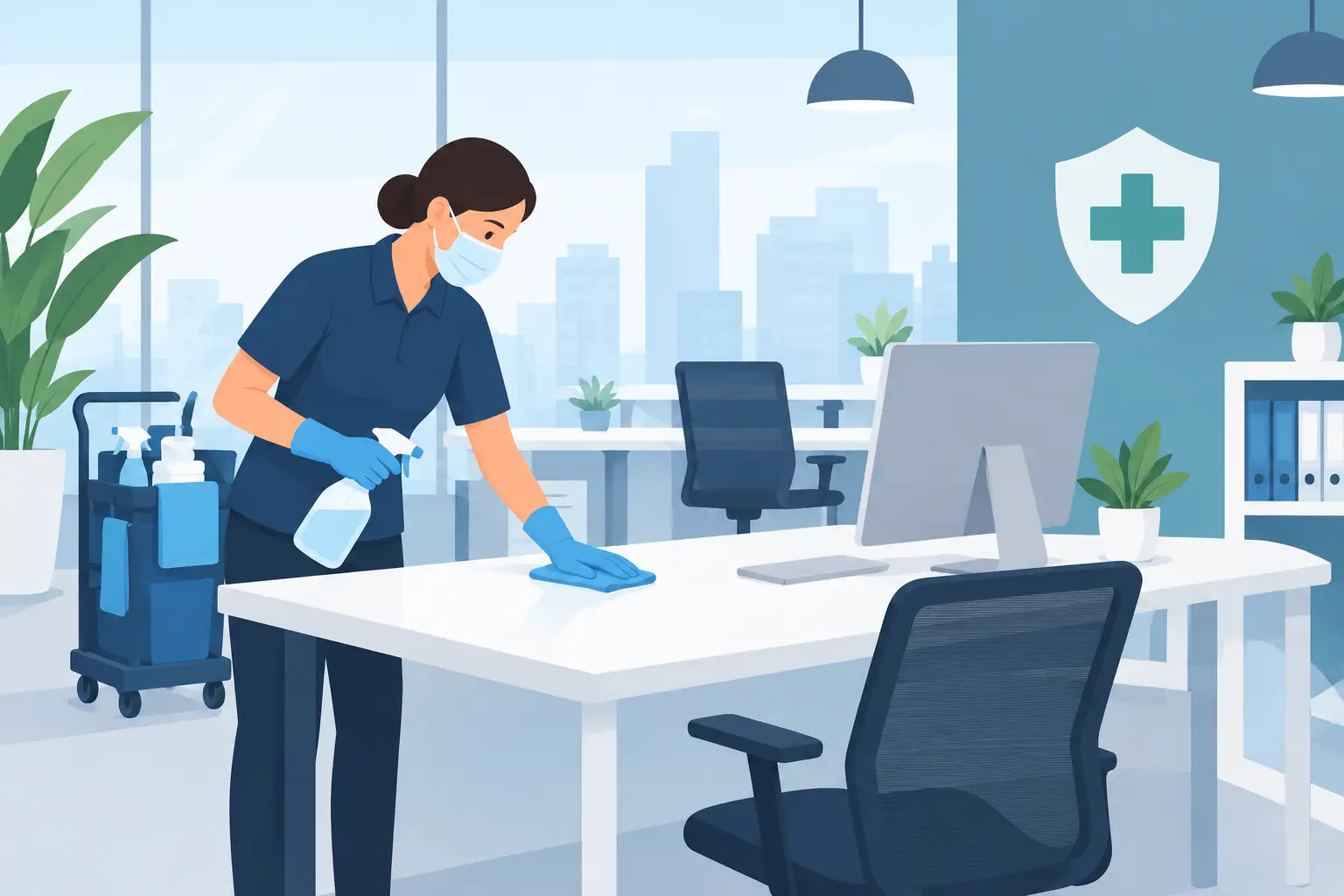
A desk can look tidy while still carrying the fingerprints, food residue, and everyday germs that move through a busy workplace. Effective office sanitisation is not about making an office smell strongly scented. It is about giving staff and visitors a clean, comfortable space where high-touch surfaces, shared facilities, and frequently used equipment receive the right level of care.
For office managers, the challenge is consistency. A quick wipe around the kitchen or a once-a-week vacuum may improve appearances, but it does not always address the surfaces people touch all day. A practical hygiene plan combines routine cleaning with scheduled sanitizing, professional attention to detail, and a clear understanding of what needs to be done more often.
What Office Sanitisation Actually Means
Cleaning, sanitizing, and disinfecting are often used as if they mean the same thing. They do not.
Cleaning removes visible dust, crumbs, spills, grime, and some germs from a surface. It is the first essential step because dirt and residue can prevent a sanitizer or disinfectant from working properly. Sanitizing reduces germs on a surface to safer levels. Disinfecting is a stronger process intended for situations where a product is approved for specific pathogens and used exactly as directed.
Most offices need a well-managed combination of regular cleaning and targeted sanitizing. The right approach depends on the size of the team, the number of visitors, the layout of shared spaces, and the nature of the work. A small office with assigned desks has different needs from a customer-facing business, a medical setting, or a large shared workspace.
The products matter, but technique matters just as much. A surface must be cleaned first when it is visibly soiled, then kept wet for the contact time stated on the product label. Spraying and immediately wiping away a product may leave a surface looking clean without delivering the intended sanitizing result.
The High-Touch Points That Need Regular Attention
Germs do not spread evenly throughout an office. They collect where hands repeatedly land, which is why a hygiene schedule should focus first on the areas people share.
Door handles, push plates, elevator buttons, light switches, handrails, reception counters, and restroom fixtures deserve regular attention throughout the day in busy facilities. Shared equipment also needs to be included. Think of printer touchscreens, photocopier buttons, conference-room remotes, phones, keyboards used by multiple people, and tablet devices at reception.
Break rooms need particularly careful cleaning. Refrigerator handles, microwave buttons, coffee machines, faucet handles, cabinet pulls, and dining tables can become high-contact areas quickly. Emptying trash, cleaning spills promptly, and keeping food-preparation surfaces hygienic also helps prevent odors and pests from becoming an issue.
Restrooms are another priority. A clean restroom says a great deal about how a business operates. Beyond toilets and sinks, professional cleaning should include dispensers, stall locks, door handles, mirrors, floors, and the areas around fixtures where splashes and buildup can develop. Supplies such as soap, paper towels, and toilet paper should be checked as part of the routine rather than only replaced after someone reports they are gone.
How Often Should an Office Be Sanitized?
There is no single schedule that suits every workplace. The best frequency is based on foot traffic, shared surfaces, visitor volume, and the level of hygiene expected in the facility.
A low-traffic office may only need professional general cleaning once or twice a week, supported by staff tidying workstations and cleaning up after meals. A larger office, a call center, a retail administration space, or a business with frequent visitors may benefit from daily cleaning and more frequent attention to shared touchpoints.
High-contact areas should usually be cleaned and sanitized daily, and sometimes several times a day during busy periods. Restrooms, kitchens, reception areas, and meeting rooms often need a more frequent schedule than private offices. Carpets, upholstery, windows, and hard floors require less frequent service, but they should not be ignored simply because the dirt is less visible.
A good cleaning provider can help set a schedule that fits how the building is actually used. There is little value in paying for tasks that do not match your needs, but cutting the schedule too far can lead to worn floors, stained carpets, unpleasant odors, and a drop in workplace presentation.
Office Sanitisation Without Damaging Surfaces
Using a stronger chemical is not always the better choice. Some disinfectants can dull finished floors, affect stone surfaces, dry out upholstery, or leave residue on glass and electronics. Different surfaces need different products and methods.
Electronics, for example, should be cleaned with care to avoid excess moisture. Hard floors may need a neutral cleaner or a treatment designed for their finish. Carpet cleaning should address embedded dirt and spills without overwetting the fibers or leaving behind sticky residue that attracts more soil. In kitchens and restrooms, the focus is on hygiene as well as preventing buildup around fixtures, grout, and edges.
Eco-conscious products can be an excellent choice for regular office care when they are selected for the task and used correctly. They can help reduce harsh odors and create a more pleasant environment for staff and visitors. However, environmentally considerate cleaning should still meet the hygiene requirements of the space. Professional cleaners assess the surface, the soil level, and the required outcome rather than applying the same product everywhere.
Build a Routine Staff Can Follow
Professional cleaning works best when it is supported by sensible daily habits. Staff should not be expected to replace a cleaning team, but simple shared responsibility keeps the office in better condition between visits.
Encourage employees to clear food and drink spills promptly, avoid leaving dishes in sinks, and keep personal desks reasonably free of clutter. Provide hand soap, paper towels, sanitizer where appropriate, and clearly marked waste and recycling bins. In meeting rooms, a quick reset after each session makes the next group feel welcome and helps prevent cups, crumbs, and waste from building up.
It also helps to assign responsibility for reporting problems early. A leaking soap dispenser, a stained carpet tile, a persistent restroom odor, or a damaged floor finish is easier and less expensive to address before it becomes a larger maintenance issue.
When Professional Office Cleaning Makes the Difference
Internal teams can handle basic tidying, but professional cleaners bring structured checklists, suitable equipment, and the time needed to complete the less visible work. This includes detailed restroom cleaning, vacuuming edges and corners, mopping floors correctly, spot-treating carpet stains, dusting vents and ledges, cleaning glass, and maintaining a polished reception area.
A professional service is especially useful when your office has multiple shared spaces, client-facing areas, or a demanding schedule. After-hours cleaning can reduce disruption, while flexible scheduling allows extra service before an event, after a busy period, or following construction work and office moves.
Eco Smart Cleaning works with commercial clients who need dependable routines as well as one-time specialist support. The goal is straightforward: clean surfaces, fresh shared spaces, and a professional first impression without adding more work to your staff’s day.
A Cleaner Office Supports Better Workdays
Office hygiene is not just a facilities task. It affects how employees feel when they arrive, how confidently visitors view your business, and how well your workplace assets hold up over time. Clean floors last longer, carpets remain more presentable, and shared spaces are easier for everyone to use when care is consistent.
Start with the touchpoints people use most, set a realistic schedule, and choose cleaning methods that suit your surfaces and traffic level. A well-cared-for office gives people one less thing to worry about, leaving them free to focus on the work that brought them there.


 +64 021 480 489