
A washroom can look acceptable at a glance and still fall short where it matters most. Odors around drains, residue on touchpoints, empty dispensers, and damp floors quickly affect how visitors, staff, residents, and customers judge the entire facility. This commercial washroom cleaning guide explains how to maintain a fresh, hygienic, and dependable standard without disrupting a busy workplace.
For office managers, school administrators, restaurant operators, healthcare teams, gym owners, and property managers, washroom cleaning is not a background task. It is part of health and safety, customer comfort, and the professional first impression your premises make every day.
What a Commercial Washroom Cleaning Guide Must Cover
A good cleaning program addresses more than toilets, sinks, and mirrors. It considers traffic levels, the type of users, the layout of the room, ventilation, surface materials, and when the washroom can be serviced safely. A small office washroom may need a detailed daily clean and light restocking between visits. A busy gym, school, retail center, or healthcare setting may need checks several times a day.
The goal is simple: remove visible soil, reduce the spread of germs, control odor, keep supplies available, and leave floors safe to walk on. Those outcomes require a consistent process, not a quick wipe-down when someone notices a problem.
Cleaning and disinfecting are related but different jobs. Cleaning removes dirt, soap residue, body oils, and other soils that can prevent a disinfectant from working properly. Disinfecting is the next step, using an appropriate product for the surface and allowing the stated contact time before wiping or air drying. Rushing this stage can leave a washroom looking clean without delivering the hygiene result the space requires.
Start With the Right Schedule
The most effective schedule depends on foot traffic and risk, not just the size of the room. High-use washrooms often need frequent service checks for consumables, floor condition, odors, and visible messes. Lower-traffic spaces may need fewer checks but should still receive a complete clean on a reliable schedule.
For many commercial facilities, it helps to separate work into three levels. Routine servicing keeps the washroom presentable during operating hours. Daily cleaning resets the room by cleaning fixtures, touchpoints, floors, and bins. Periodic deep cleaning tackles buildup in grout, around toilet bases, under fixtures, on vents, and in areas that routine visits may not reach.
A school washroom may need increased attention after breaks and lunch periods. A restaurant washroom often benefits from checks during busy service times, while a medical setting may have more specific hygiene requirements based on the people using it. There is no single timetable that suits every property. The right frequency is the one that keeps standards steady during the busiest part of the day, not only first thing in the morning.
Clean From High Touchpoints to Floors
A clear order of work prevents cross-contamination and makes the process faster. Begin by ventilating the area where possible, displaying wet-floor signage, and putting on suitable personal protective equipment. Remove trash and replace liners before cleaning surfaces, so the team is not carrying waste through a freshly serviced room.
High-touch points deserve close attention. Door handles, stall locks, flush buttons, faucet handles, soap dispensers, hand dryers, grab rails, baby changing stations, and light switches are touched repeatedly throughout the day. Clean these surfaces first, then disinfect them using the product directions for dilution and contact time.
Move next to sinks, counters, mirrors, toilets, urinals, partitions, and tiled walls. Use separate cloths and tools for toilets and urinals from those used on sinks and counters. Color-coded equipment is a practical way to reduce mistakes, particularly where multiple team members clean larger facilities.
Toilet bowls and urinals need more than a fast application of cleaner. Apply the appropriate product under rims and into internal surfaces, allow it to work, brush thoroughly, and clean the exterior from the cleanest areas toward the most soiled. Pay special attention to flush mechanisms, hinges, bases, pipework, and the floor around fixtures. These areas commonly hold splashes, dust, and odor-causing residue.
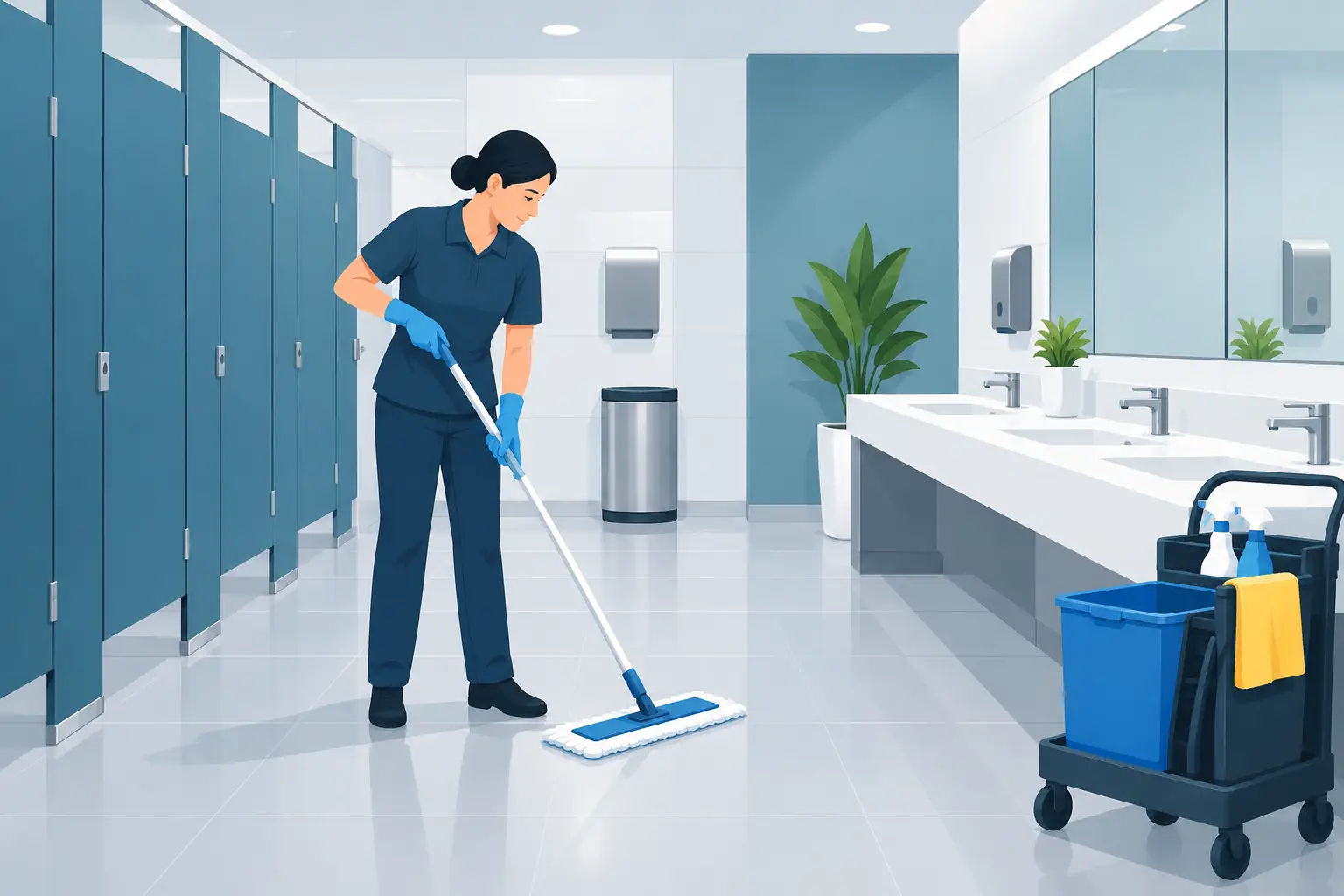
Finish with the floor. Vacuum or remove loose debris before mopping, then use a suitable floor cleaner and fresh mop head or pad. Floors must be allowed to dry properly, especially near sinks and entrances where water can create slip risks. Leaving a floor shiny but wet is not a polished result.
Control Odors at Their Source
Fragrance may temporarily mask an odor, but it cannot correct the cause. Persistent washroom odors usually come from soiled floors and grout, overflow around urinals or toilets, poorly cleaned bins, blocked drains, low water levels in traps, or inadequate ventilation.
Start by identifying when and where the odor is strongest. If it is concentrated near a drain, the issue may require maintenance rather than additional cleaning product. If it lingers around toilet bases or partitions, deep cleaning of surrounding surfaces may be needed. Regular attention to floor edges, grout lines, wall corners, and behind fixtures is often what separates a merely acceptable washroom from a genuinely fresh one.
Air fresheners can support the overall experience, but they should be a finishing touch. A clean, well-ventilated washroom should smell neutral and fresh rather than heavily perfumed.
Restock Before Supplies Become a Problem
An empty soap dispenser or paper towel unit can undermine an otherwise well-cleaned washroom. It also encourages poor hand hygiene and creates avoidable frustration for users. During each service check, confirm that soap, toilet paper, hand towels or drying systems, feminine hygiene supplies where provided, and sanitizer stations are available and working.
Look beyond stock levels. Dispenser nozzles can clog, paper towel units can jam, and hand dryers can collect dust around vents. A functional washroom is part of a clean washroom, so report damaged locks, leaking faucets, cracked seats, loose rails, and failed lighting promptly.
Choose Products That Match the Surface and Task
Using the strongest chemical is not always the best approach. The right product depends on the soil, the surface, the required hygiene outcome, and the people using the facility. Harsh products can damage finishes, etch natural stone, dull fixtures, irritate users, or create strong fumes in poorly ventilated rooms.
Eco-conscious cleaning products can be a sensible choice when they are selected for performance and used correctly. They help reduce unnecessary chemical exposure while supporting a clean finish across common washroom surfaces. However, eco-friendly does not mean one product should be used for every job. Disinfection requirements, dwell times, compatibility with surfaces, and safety data still matter.
Never mix cleaning chemicals, particularly products containing bleach, acids, or ammonia. Mixing products can release harmful fumes and create serious safety risks. Keep products labeled, stored securely, and used according to manufacturer directions.
Train for Consistency, Not Just Speed
Commercial washroom cleaning is often judged in seconds by the person walking in. That makes consistency essential. A written checklist helps cleaners complete the same critical tasks each visit, but it should support professional judgment rather than replace it. A checklist cannot notice a new leak, an unusual odor, a damaged dispenser, or a slippery patch unless the cleaner is trained to look for it.
Quality checks should focus on both visible results and the details users notice: streak-free mirrors, dry floors, clean corners, empty bins, stocked dispensers, sanitary fixtures, and a neutral fresh smell. In high-traffic facilities, service logs can also help teams spot patterns, such as washrooms that repeatedly run out of supplies or need extra attention at certain times.
When Professional Support Makes Sense
An in-house team may handle routine cleaning well, but specialist support can be valuable when standards need to be raised, staffing is stretched, or a facility has demanding hygiene needs. Deep cleaning can remove buildup that has developed over time, while a scheduled commercial program creates accountability around frequency, supplies, and inspection points.
Eco Smart Cleaning works with commercial properties that need practical schedules, detailed cleaning standards, and service that fits around operating hours. Whether the need is ongoing washroom care or a one-time deep clean, the best approach is one matched to the building, its traffic, and the condition of its surfaces.
A clean washroom tells people that their comfort and safety have been considered. Keep the routine consistent, respond quickly to the details that users notice, and the rest of your facility will benefit from the confidence that creates.


 +64 021 480 489