
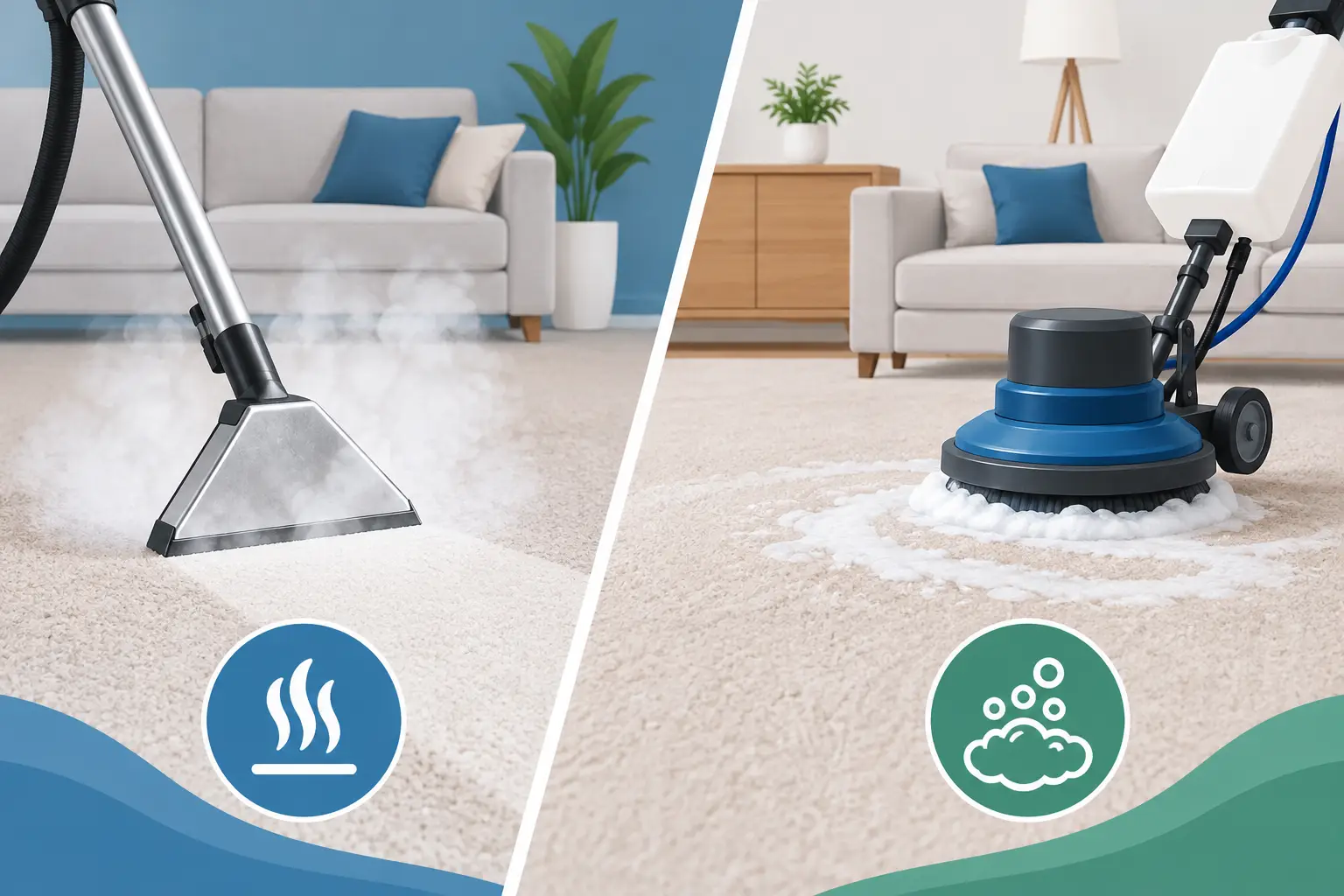
A carpet can look reasonably clean while holding tracked-in soil, pet dander, food residue, and moisture beneath the surface. That is why steam cleaning versus shampooing carpets is not simply a choice between two machines. The right method depends on the carpet fiber, the type of soil, how quickly the area needs to be used again, and whether you are maintaining a home, preparing for a move, or caring for a busy commercial space.
For most deeply soiled carpets, professional hot-water extraction – commonly called steam cleaning – provides the more thorough reset. Shampooing still has a place in certain maintenance situations, but it must be performed carefully to avoid leaving detergent behind. Understanding the difference helps protect your carpet, improve indoor freshness, and make a practical decision for your property.
Steam Cleaning Versus Shampooing Carpets: The Main Difference
Steam cleaning is the familiar name for hot-water extraction. A professional machine applies heated water and a suitable cleaning solution into the carpet, agitates the fibers as needed, then extracts the dirty water with powerful vacuum suction. The process does not usually involve literal steam rolling across the floor. Instead, the heat, solution, agitation, and extraction work together to lift embedded dirt from deep in the pile.
Carpet shampooing uses a foaming detergent that is worked into the carpet with a rotary machine or brush. Traditionally, the shampoo loosens surface soil, and the carpet is left to dry before the remaining residue is vacuumed away. Some modern low-moisture systems use encapsulating products that dry into crystals and can be vacuumed out. These are different from old-style shampooing, but they are sometimes described using the same term.
The biggest practical difference is extraction. Hot-water extraction removes a significant amount of soil, cleaning solution, and moisture during the service. Traditional shampooing can loosen dirt effectively, but if the detergent is not fully removed, the residue may attract new soil and make the carpet look dull again sooner.
When Steam Cleaning Is the Better Choice
Steam cleaning is usually the stronger option when a carpet needs more than a quick visual improvement. It is especially useful after months of regular foot traffic, when children or pets use the space often, or when the carpet has visible traffic lanes near entrances, sofas, hallways, and workstations.
Because the method flushes and extracts rather than simply coating fibers with foam, it is well suited to deep cleaning before a move-out inspection, after building work, or when restoring a rental property between tenants. It can also be a good choice for offices, schools, clinics, and other facilities where carpet hygiene and a professional first impression matter.
Professional equipment makes a meaningful difference here. Strong extraction helps remove more suspended soil and leaves less moisture behind than many rental machines. This matters because excess water can extend drying time and, in poorly ventilated conditions, create an unpleasant musty smell. A trained cleaner will also assess the carpet first, identify fiber type, test products where appropriate, and adjust the process around stains and heavily soiled areas.
Steam cleaning is not a cure-all for every mark. Permanent dye loss, bleach spots, old paint, and some set-in stains may not fully lift. Still, a thorough extraction clean often produces the most noticeable improvement in texture, color, and overall freshness.
What to Expect After Hot-Water Extraction
Drying time varies based on weather, humidity, airflow, carpet thickness, and how much soil had to be treated. Many carpets feel dry within several hours, although heavier pile or heavily cleaned areas can take longer. Open windows when conditions allow, run ventilation or air conditioning, and avoid replacing heavy furniture until the carpet is dry.
It is also wise to keep children and pets off the carpet until it is fully dry. Clean fibers can pick up dirt easily while damp, particularly near exterior doors. If furniture must be returned sooner, protective tabs can help prevent wood stain or metal marks from transferring to the carpet.
When Shampooing May Make Sense
Shampooing or low-moisture cleaning can be useful when drying speed is the main concern. For example, a business may need a carpet refreshed overnight before staff or customers return in the morning. A low-moisture method can improve appearance with less water, making it practical for routine upkeep in lightly soiled commercial areas.
It can also suit some carpet types and maintenance programs where frequent light cleaning is preferable to waiting until dirt is deeply embedded. The key is using the correct product in the correct amount and removing or vacuuming residue properly after drying.
That said, shampooing is less ideal for a carpet carrying heavy soil, greasy buildup, pet accidents, or residue from previous do-it-yourself cleaning products. In these situations, adding more detergent without thorough extraction can worsen the problem. The carpet may initially look brighter, then rapidly attract dirt as people walk over it.
A professional cleaner should be able to explain whether the proposed low-moisture process is true shampooing, encapsulation cleaning, bonnet cleaning, or another method. These terms are often used loosely, but they do not deliver identical results.
Consider the Carpet, Not Just the Stain
The safest cleaning method depends partly on the carpet itself. Synthetic carpets, such as nylon and polyester, are generally durable and commonly respond well to professional hot-water extraction. Wool, natural fibers, delicate rugs, and carpets with unstable dyes need more careful treatment. Too much heat, moisture, or aggressive agitation can affect texture, color, or backing.
For that reason, the most reliable approach is not choosing a method from a label alone. A proper assessment should consider the age and condition of the carpet, its backing, previous cleaning history, stain type, and the room’s ventilation. An inherited stain in a sunroom may need a different approach from a coffee spill in a high-traffic office hallway.
Pet odors are another example. Surface cleaning may make the carpet smell better temporarily, but odor-causing material can reach the backing or subfloor. Effective treatment may require targeted enzyme products, odor treatment, and extraction rather than shampoo alone. The same is true of greasy kitchen-adjacent carpets, where soil can bind tightly to fibers.
Cost, Convenience, and Long-Term Results
Shampooing may appear less expensive at first, particularly when using a rental machine or a quick spot-cleaning service. However, the better value is the method that matches the condition of the carpet. A cheaper clean that leaves residue, fails to address deep soil, or requires repeating soon afterward is rarely the economical option.
Steam cleaning can involve a longer drying period, but it often gives a better result for carpets that need restoration. For landlords and property managers, this can help present a fresher property between occupants. For homeowners, it can extend the usable life of carpet by removing abrasive grit that gradually wears down fibers. For commercial operators, planned professional cleaning supports a cleaner, more welcoming environment for staff, clients, residents, and visitors.
Regular vacuuming remains essential whichever professional method you choose. Vacuuming removes dry soil before it is pressed deep into the pile, while prompt blotting reduces the chance that spills become permanent stains. Avoid rubbing a fresh spill, as this can spread it and damage the carpet fibers. Instead, blot from the outside toward the center with a clean, absorbent cloth.
Choosing the Right Service for Your Space
If your priority is deep soil removal, odor treatment, move-out presentation, or a complete refresh, hot-water extraction is generally the better choice. If you need low-moisture maintenance and a quick return to use in a lightly soiled setting, a professional shampooing or encapsulation-style process may be appropriate.
The best provider will not treat every carpet the same. They will inspect the area, discuss stains and drying expectations, use products suited to the surface, and explain what results are realistic. At Eco Smart Cleaning, that careful approach helps homes and workplaces receive cleaning that is matched to their condition rather than a one-size-fits-all service.
A clean carpet should feel as good underfoot as it looks from the doorway. Before booking, think about what your carpet has been through, how soon the room needs to be used, and whether you need a light refresh or a deeper clean. That small distinction can lead to a fresher, healthier, longer-lasting result.


 +64 021 480 489