
A fabric sofa can look clean and still hold onto the smells of daily life: damp jackets, pets, cooking, spilled drinks, or a room that has stayed closed up too long. Knowing how to deodorise fabric sofas properly means treating the source of the odor without soaking the upholstery, setting a stain, or leaving behind a stronger fragrance than the one you were trying to remove.
For a fresh, comfortable living space, start gently and work in stages. Most odors improve with dry soil removal, ventilation, and careful spot treatment. Persistent smells, however, can be a sign that oils, moisture, or bacteria have traveled deeper into the cushions and need professional upholstery cleaning.
Start by finding the source of the odor
Before applying any deodorizer, take a few minutes to identify what is causing the smell. This matters because the right method for a sofa that smells slightly musty is not always the right method for pet accidents, food spills, or smoke.
Remove throws, cushions, and loose covers where possible. Check under seat cushions, along seams, behind the sofa, and beneath it. Crumbs, pet hair, old spills, and damp items often collect in places that are easy to overlook. If the odor becomes stronger in one particular area, that is where cleaning should be focused.
A musty smell may point to excess moisture, especially after a spill or during damp weather. A sour odor often comes from food, drink, or body oils. Pet urine requires an enzyme-based treatment designed to break down the odor-causing residue. Smoke and cooking odors can settle across the full surface of the upholstery, not just one spot.
Check the care label first
Look for the upholstery cleaning code, usually found beneath a cushion or on the sofa frame. It tells you which cleaning methods are suitable for the fabric.
- W means water-based cleaners are generally suitable.
- S means use a solvent-based upholstery cleaner only.
- WS means either water- or solvent-based products may be used.
- X means vacuum only, with professional cleaning recommended for stains or odor removal.
These codes are useful, but they do not replace a patch test. Test any product on a hidden area first, such as the back of a cushion or the fabric near the base of the sofa. Allow it to dry fully before checking for color change, water marks, stiffness, or fabric damage.
Vacuum thoroughly before deodorizing
Odors often cling to dust, skin cells, pet hair, crumbs, and other dry debris. Vacuuming may sound basic, but it is one of the most effective first steps when deodorizing fabric upholstery.
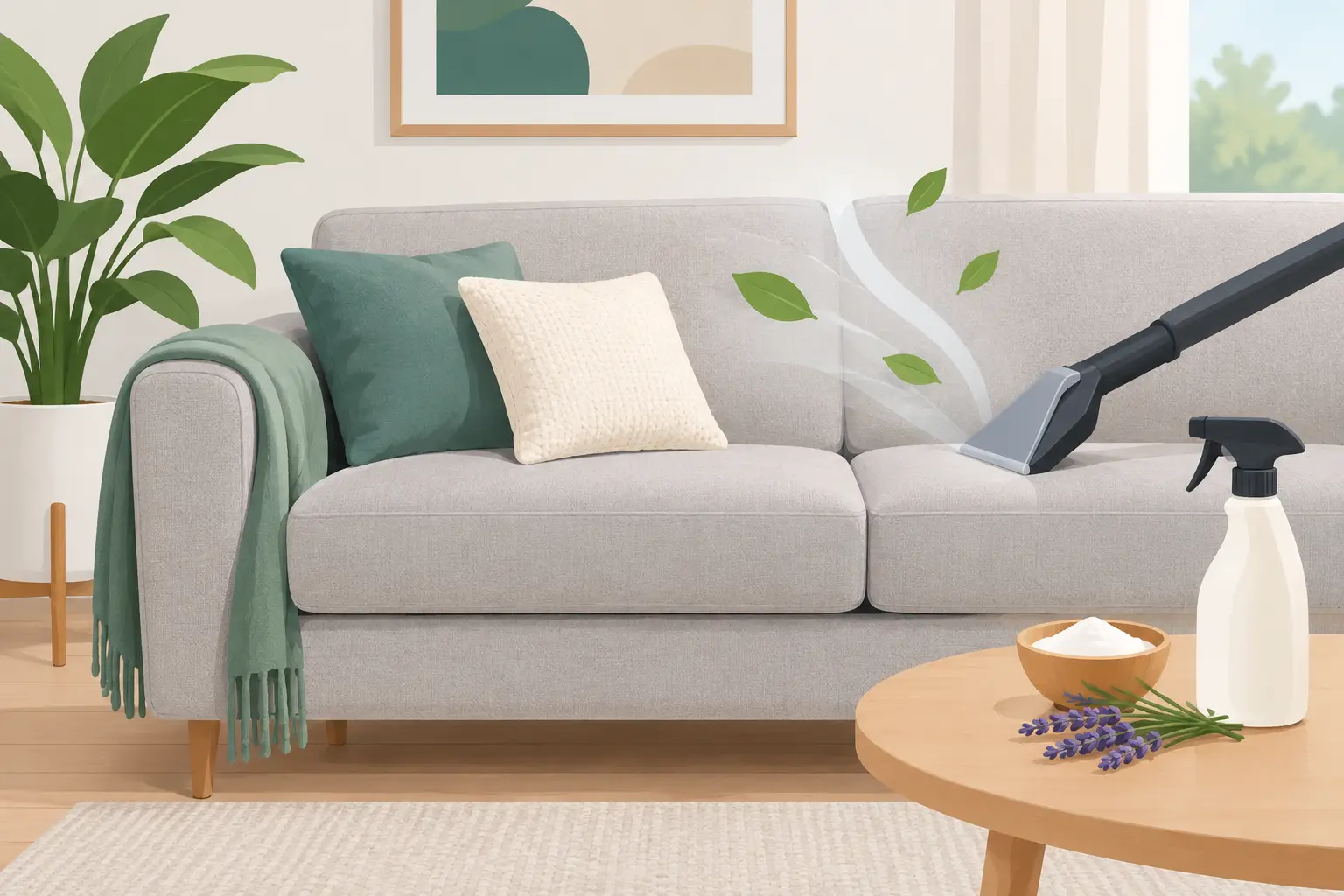
Use an upholstery attachment and move slowly across every section of the sofa. Pay close attention to seams, piping, armrests, under cushions, and the gaps between the back and seat. If cushions are removable, vacuum both sides and the sofa base underneath.
For households with pets, a rubber brush or lint tool can help lift fur before vacuuming. This is especially worthwhile because pet hair can hold oils and odors that ordinary vacuuming misses.
Use baking soda carefully for general odors
For a dry, surface-level odor, baking soda can be a simple option. It is best suited to sofas with a mild stale smell rather than upholstery affected by urine, mildew, or a heavily soiled spill.
Sprinkle a light, even layer over the dry fabric. Avoid piling it on, as excess powder can settle deep into the weave and be difficult to remove. Let it sit for several hours, or overnight if the sofa is in a dry, well-ventilated room. Then vacuum slowly and thoroughly using the upholstery tool.
Baking soda can help absorb everyday odors, but it does not sanitize fabric or remove the residue behind a spill. If the smell returns quickly, the cause is likely deeper than the surface. Repeating the same dry treatment will not solve a moisture problem or an untreated stain.
Treat spots without over-wetting the fabric
When the odor comes from a specific spill, clean the affected area rather than masking it. Blot fresh moisture with a clean white cloth or paper towel. Press down firmly, but do not scrub. Scrubbing can spread the spill, push it deeper into the cushion, and roughen the fabric fibers.
For water-safe upholstery, use a small amount of approved fabric cleaner on a cloth rather than applying it directly to the sofa. Work from the outer edge of the mark toward the center. Blot away the cleaner with a second lightly damp cloth, then press with a dry towel to remove as much moisture as possible.
The key is restraint. Saturating a sofa can create water rings, weaken adhesives, encourage mildew, and leave moisture trapped in foam cushions. A fabric surface may feel dry while the filling underneath remains damp.
For pet odors, use an enzyme cleaner
Pet urine is one of the few odors that typically needs a product made for the job. Standard deodorizing sprays may make the room smell better temporarily, but they do not break down the uric acid residue that causes the odor to return.
Choose an upholstery-safe enzyme cleaner and follow the label directions closely. The product must reach the same depth as the original accident to work effectively, but this is where care is needed. If urine has soaked through to the cushion insert or sofa base, a light surface treatment may not be enough, while over-application can leave the cushion too wet.
For an older or widespread pet odor, professional extraction is often the safer choice. It can remove embedded contamination while controlling moisture and drying time.
Air out the sofa and the room
Fresh air is not a cure for a soiled sofa, but it makes a real difference after cleaning and helps prevent damp odors from developing. Open windows when weather allows, run ceiling or portable fans, and keep cushions separated until they are fully dry.
Avoid placing a damp sofa directly against a cold wall or closing up the room immediately after cleaning. Air movement helps moisture leave the upholstery evenly. In humid conditions, a dehumidifier may be more effective than open windows.
If the sofa smells only when the room is closed, consider the wider environment as well. Carpets, curtains, pet bedding, air-conditioning filters, and nearby bins can all affect how a living area smells. Deodorizing the sofa without addressing these sources may lead to disappointing results.
Avoid common deodorizing mistakes
Strong fragrance sprays are tempting, but they often cover odors instead of removing them. They can also leave a sticky residue that attracts more dust and may bother people with allergies, asthma, or scent sensitivity. A sofa should smell clean and neutral, not heavily perfumed.
Steam cleaning is another area where caution is needed. Some fabric sofas can tolerate controlled hot-water extraction, while others can shrink, bleed, or develop water marks. Steam can also drive moisture into cushion foam if used incorrectly. Never assume that a household steam cleaner is safe simply because the sofa is fabric.
Vinegar is frequently recommended as a household deodorizer, but it is not the right answer for every upholstery type. Its acidity and smell can be unsuitable for delicate fabrics, and applying too much liquid can create new problems. Follow the care code and use products formulated for upholstery whenever possible.
When professional upholstery cleaning is worth it
A professional service is a practical option when odors keep returning, the sofa has large or old stains, cushions feel damp, or you are preparing a rental property for new tenants. It is also wise for high-value upholstery, delicate fabrics, and sofas with an X cleaning code.
Professional upholstery cleaning uses suitable methods for the fabric and condition of the sofa, with equipment designed to lift embedded soil while managing moisture. This is especially valuable after pet accidents, smoke exposure, food spills, or long periods of use in a busy home.
At Eco Smart Cleaning, upholstery cleaning is approached as more than a surface refresh. The goal is a clean, hygienic result that helps your furniture look cared for and your home feel comfortable again.
A well-maintained sofa does not need to smell like fragrance to feel fresh. Regular vacuuming, quick attention to spills, good airflow, and the right level of cleaning will protect the fabric and make the space more pleasant for everyone who uses it.


 +64 021 480 489