

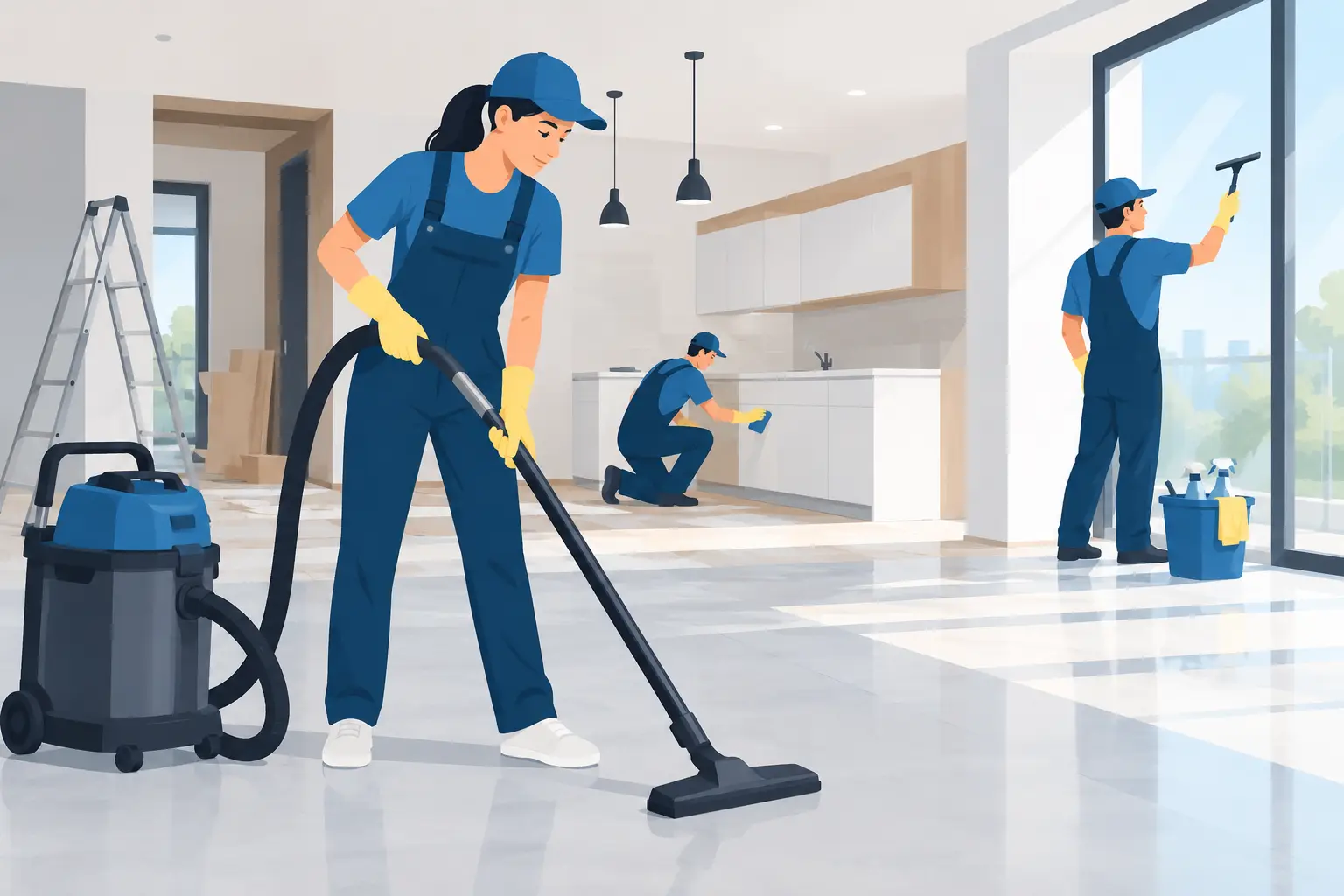
A newly built home can look finished long before it is truly ready to live in. Fine dust settles inside cabinets, on window tracks, and across freshly installed floors. Paint specks, adhesive residue, grout haze, and construction debris can remain in places that are easy to miss. Professional new home cleaning after construction turns a completed build into a fresh, safe, and comfortable home for move-in day.
Why Post-Construction Cleaning Needs More Than a Standard Clean
Construction creates a different kind of mess from everyday living. Dust from drywall, timber, concrete, and cutting work is extremely fine. It travels through open spaces and air vents, then settles repeatedly after the first wipe-down. A quick vacuum and surface clean may improve the appearance, but it often leaves residue behind on trim, fixtures, floors, and inside storage areas.
The work also requires care. New surfaces may be beautiful, but they can be vulnerable. Harsh products can dull polished stone, damage protective floor coatings, or leave streaks on new glass. Abrasive pads can scratch stainless steel appliances, chrome fixtures, and freshly fitted cabinetry. The goal is not simply to make a new home look clean. It is to remove building residue while protecting the finishes you have invested in.
A post-construction clean also helps reveal items that need the builder’s attention. Once dust and packaging are gone, it is easier to spot paint drips, scratches, uneven caulking, chips, or incomplete work before final handover.
What New Home Cleaning After Construction Should Cover
The right scope depends on the stage of the project. A builder may arrange an initial rough clean during construction, while homeowners or property managers may need a detailed final clean before furniture arrives. For an occupied renovation, cleaning may need to be completed in stages so the lived-in areas remain usable.
A thorough final clean starts from the top down. Ceilings, light fittings, vents, walls, trims, doors, and frames are carefully dusted or wiped before attention moves to lower surfaces. This order matters because dust falling from higher areas should not land on floors that have already been cleaned.
Kitchens, bathrooms, and storage spaces
Kitchens and bathrooms need detailed work because construction residue collects in corners, drawers, fittings, and new cabinetry. Cupboards and drawers should be cleaned inside and out, including handles, hinges, shelves, and edges. Countertops, backsplashes, sinks, faucets, cooktops, range hoods, and appliances need product-safe cleaning to remove dust, fingerprints, labels, and protective film residue.
In bathrooms, cleaners should address tiles, grout lines, shower glass, tubs, toilets, vanities, mirrors, and chrome fittings. Grout haze and residue on tile are common after new construction, but the correct method depends on the tile and grout type. Using the wrong acidic cleaner on natural stone, for example, can cause permanent etching. This is one area where surface knowledge matters as much as effort.
Built-in wardrobes, linen closets, utility cupboards, and shelving should not be overlooked. These spaces often look clean at first glance but hold sawdust, packaging fragments, and fine dust in their corners.
Windows, glass, and detailed finishes
New windows can carry sticker residue, paint spots, silicone smears, and dust in tracks and frames. Glass needs a streak-free finish, but any scraping must be done cautiously. Tough residue can sometimes be removed safely, but using a blade incorrectly can scratch glass or damage window coatings.
Detail cleaning also includes switches, outlets, door handles, baseboards, skirting boards, vents, light switches, and hardware. These are the small areas that make a home feel polished rather than merely wiped down. A clean window track, clear mirror, and dust-free door frame all contribute to the professional first impression of a finished property.
Floors and carpeted areas
Floors deserve special attention because they collect the largest amount of dust and grit. Before wet cleaning, hard floors should be thoroughly vacuumed using appropriate equipment. Grit dragged under a mop can scratch timber, vinyl, laminate, and polished surfaces.
The cleaning method must match the floor. Some new hard floors need only a gentle pH-neutral clean, while others may require a product approved by the manufacturer. Newly installed carpet can also retain construction dust along its edges and under protective coverings. A professional vacuum can remove fine debris, while carpet cleaning may be appropriate where dust, footprints, or stains are embedded.
If adhesives, paint, grout, or plaster have landed on flooring, do not assume a stronger chemical is the answer. Removal should be tested in a discreet area and carried out with products suitable for that exact material. The fastest method is not always the safest one.
Why Fine Dust Should Be Taken Seriously
The dust left after a build is more than a cosmetic problem. It can aggravate allergies and create an uncomfortable environment, especially for children, older adults, and people with respiratory sensitivities. Fine particles can continue circulating when doors open, heating or cooling systems run, or furniture is moved into place.
Dry sweeping is rarely the best response. It can lift fine dust back into the air rather than capturing it. Professional-grade vacuuming, microfiber methods, and repeated cleaning of horizontal surfaces are more effective. Depending on the project, air vents and filters may also need inspection so the new home’s systems are not distributing leftover dust.
For major renovation or building work, there may be additional safety concerns. Older properties can contain hazardous materials, and certain construction dusts need specialist controls. Cleaning should never replace required remediation or safety procedures. If there is any doubt about asbestos, lead-based paint, mold, or other hazardous contamination, use qualified specialists before standard cleaning begins.
When to Schedule the Final Clean
Timing makes a significant difference. The most effective final clean happens after major trade work is complete, debris has been removed, paint has cured as required, and contractors no longer need to walk through the home with tools and materials. Scheduling too early can mean paying for a detailed clean twice.
That said, waiting until the last possible hour can create pressure. If you are moving in immediately after handover, allow enough time for the cleaner to work carefully and for you to inspect the home afterward. Larger homes, multi-level properties, heavily glazed areas, and homes with detailed finishes may require more time than expected.
For renovations, a staged approach can be practical. An initial clean removes heavy dust and debris after building work, followed by a final detail clean once touch-ups and installations are complete. It depends on the size of the project, the condition of the home, and whether the space has remained occupied.
Preparing for a Post-Build Cleaning Service
A few simple steps help the cleaning team deliver the best result. Confirm that construction waste, tools, ladders, and unused materials have been removed. Make sure electricity and water are available, and let the team know about delicate surfaces such as marble, unsealed stone, specialty timber, or newly polished concrete.
It also helps to identify any concerns before cleaning begins. If you have noticed paint splatter on a floor, cloudy shower glass, adhesive marks, or dust coming from a particular vent, point it out. A clear brief helps set the right expectations and ensures time is focused where it is needed most.
Take photos of completed surfaces before other contractors return to the property. This is useful for final handover records and can make follow-up conversations easier if damage or incomplete work is discovered later.
Choosing a Cleaner for a New Build or Renovation
A good post-construction cleaner should ask questions about the property rather than offer a one-size-fits-all answer. The number of rooms, floor types, window count, level of debris, and presence of construction residue all affect the work involved. Clear quoting and a defined scope help avoid surprises.
Look for a team that understands different surfaces, uses professional equipment, and works with care around new finishes. Eco-friendly products can be an excellent choice when they are selected for the surface and task, but gentle should not mean ineffective. The right products and methods remove residue without leaving strong odors or unnecessary chemical buildup in a new home.
Eco Smart Cleaning provides detailed post-build cleaning for homes across Wellington and the Kapiti Coast, with practical care for floors, glass, kitchens, bathrooms, and the finishing details that matter at handover.
A new home deserves its first day to feel fresh and spotless, not like the last day of construction. Give the final clean the time and attention it needs, and you can bring furniture through the door knowing the space is ready to be lived in.


 +64 021 480 489