

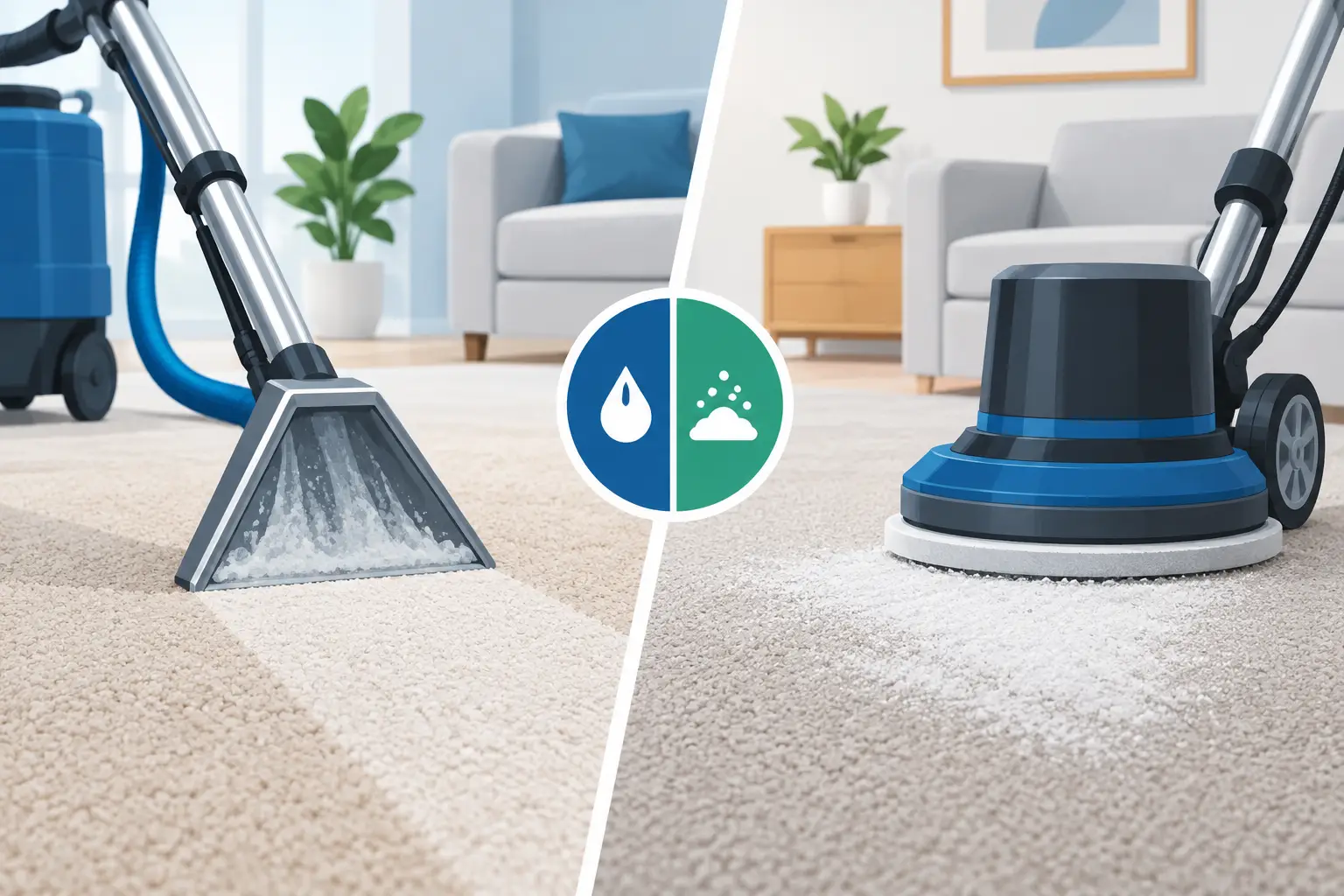
A carpet can look acceptable from the doorway while holding tracked-in soil, pet residue, allergens, and spills deep in its fibers. That is why carpet extraction versus dry cleaning is not simply a question of which method is faster. The right choice depends on how dirty the carpet is, how soon the area must be used, the carpet type, and the standard of hygiene your home or workplace needs.
Both methods have a place in professional carpet care. One is generally better for deep restoration and flushing out embedded dirt; the other can be a practical option when low moisture and a rapid return to service matter most.
Carpet Extraction Versus Dry Cleaning at a Glance
Carpet extraction, often called hot-water extraction or steam cleaning, applies a controlled cleaning solution and hot water to the carpet, then immediately removes the water, loosened soil, and residue with a powerful vacuum. Despite the common name, the process does not rely on clouds of steam. Its value comes from agitation, rinsing, and strong recovery.
Dry cleaning is a broad term. In carpet care, it commonly refers to low-moisture methods such as absorbent compound cleaning, encapsulation cleaning, or bonnet cleaning. These approaches use considerably less water than extraction. Soil is loosened and captured in a compound or crystallized for vacuuming, allowing the carpet to dry much sooner.
Extraction is usually the stronger choice for a carpet that needs a genuine deep clean. Dry cleaning is often the better operational choice for carpet that is lightly soiled and needs to be walked on again quickly.
How Carpet Extraction Cleans More Deeply
Extraction is designed to reach below the carpet surface. A technician pre-treats marks and high-traffic lanes, applies the appropriate cleaning solution, and uses professional equipment to rinse and recover contamination from the pile.
This matters in family homes with pets, children, muddy shoes, or long gaps between professional cleans. It also matters in rentals before a move-out inspection, where traffic marks, food spills, and general buildup can make even a vacuumed carpet look tired. For offices, waiting rooms, schools, and other busy settings, extraction can remove the gray, compacted soil that gathers in walkways and around entrances.
A well-performed extraction clean can improve appearance, reduce odors, and remove a substantial amount of hidden soil. It is especially useful when stains have been treated promptly but still leave a visible shadow, or when the carpet feels flat and gritty underfoot.
The drying-time trade-off
The main consideration with extraction is drying time. Depending on carpet construction, ventilation, humidity, soil level, and equipment quality, carpets may need several hours to dry fully. Good air movement, open windows when conditions allow, and heating or air conditioning can help.
Professional equipment should recover most of the moisture rather than leave the carpet saturated. A carpet that remains very wet for an extended period is not the goal, and it can create odor or mildew concerns. This is why proper technique, measured solution use, and thorough extraction are as important as the machine itself.
For a home, scheduling extraction in the morning can give the carpet time to dry before evening. For a workplace, it may suit an after-hours cleaning program or a period when rooms can remain unused.
When Dry Cleaning Makes Sense
Low-moisture carpet cleaning is often chosen for speed. Because it uses less water, many dry-cleaned carpets can be used soon after service, sometimes within an hour or two depending on the method and conditions.
That makes dry cleaning useful in commercial spaces that cannot easily close off a large area. A retail floor, office corridor, classroom, or reception area may need to stay presentable without the disruption of a longer drying window. It can also work well as a maintenance clean between periodic extraction services.
Some carpet types and installations also benefit from a low-moisture approach. Carpet with delicate backing, concerns around seams, or a history of slow drying may require a more cautious method. The cleaner should inspect the carpet first rather than apply the same process to every room.
What dry cleaning may not remove
Fast drying does involve a trade-off. Low-moisture methods may not flush out heavy contamination as thoroughly as extraction. If the carpet has deep pet odors, sticky spills, old food residue, or embedded grit, dry cleaning can freshen the surface without fully resolving the source of the problem.
Bonnet-style cleaning, in particular, can be effective for improving the look of surface traffic lanes, but it is not always the right answer for a heavily soiled residential carpet. A responsible recommendation should be based on the condition of the carpet, not on a one-method-fits-all promise.
Which Method Is Better for Stains and Odors?
For significant staining, extraction usually has the advantage because it can rinse dissolved soil and cleaning solution out of the fibers. That said, no method can guarantee every stain will disappear. Permanent color loss, bleach marks, dye transfer, rust, and stains that have been repeatedly treated with unsuitable products may remain visible even after professional work.
Odors also need a targeted approach. Pet accidents, for example, often travel below the carpet fibers into the backing or underlay. Surface deodorizer alone may mask the smell temporarily. The affected area needs inspection, appropriate odor treatment, and sometimes extraction to remove as much residue as possible.
Dry cleaning can be suitable for light odors and routine refreshes, but persistent odor issues often call for deeper treatment. The same principle applies to carpets in homes with smokers, busy entryways, or food-service environments.
Choosing for Homes, Rentals, and Commercial Spaces
The best method is often determined by use, not preference.
For a family home that has not been professionally cleaned in a while, extraction is usually the sensible starting point. It offers a more complete reset after winter, muddy weather, gatherings, pet activity, or everyday life. Area rugs and upholstered furniture may also need separate assessment, since their fibers, dyes, and backing can require a different process.
For tenants and landlords, the goal is generally a clean, fresh, inspection-ready finish. Extraction is frequently appropriate where visible traffic patterns and buildup need attention. If the carpet is lightly marked but access is limited and drying time is critical, a low-moisture method may be recommended instead.
For commercial properties, a planned combination can provide the best result. Dry cleaning or encapsulation can maintain appearance in high-traffic zones between deeper services, while periodic extraction handles accumulated soil and supports a cleaner, more professional first impression. This approach can help protect the carpet investment without causing unnecessary disruption to staff, visitors, customers, or residents.
The Carpet Type Still Matters
Not every carpet should be cleaned the same way. Synthetic carpets are commonly well suited to extraction, provided the process is correctly controlled. Natural fibers such as wool can be more sensitive to heat, alkalinity, overwetting, and aggressive agitation. Certain rugs, glued-down carpets, and older installations need extra care as well.
Before choosing carpet extraction or dry cleaning, a professional should consider fiber type, pile construction, backing, colorfastness, current condition, and the source of any stains. This assessment protects the carpet and helps set realistic expectations before cleaning begins.
Eco-friendly products also matter, particularly in homes with children, pets, or people sensitive to strong fragrances. Low-residue products, careful dilution, and proper extraction support a cleaner finish without leaving behind unnecessary chemical smell or sticky residue that can attract new dirt.
A Better Question Than “Which Is Best?”
Rather than asking whether extraction or dry cleaning is universally better, ask what the carpet needs right now. Does it need deep soil removal, stain treatment, and odor control? Can the room remain off limits while it dries? Or is the priority a low-moisture maintenance clean with minimal interruption?
A capable cleaning provider should explain the recommendation in plain language, identify limitations, and match the method to the space. Eco Smart Cleaning approaches carpet care this way: with attention to fiber type, hygiene needs, visible results, and the practical realities of your schedule.
A clean carpet should feel like more than a quick cosmetic improvement. Choose the process that gives your space the right level of care, then give it the time and conditions it needs to look fresh, feel comfortable, and stay that way longer.


 +64 021 480 489