
A kitchen counter can look spotless and still need attention after raw food preparation. A school restroom may be visibly clean but require a higher level of germ control after a busy day. That is where disinfection versus sanitisation explained becomes more than a matter of wording. Choosing the right process helps protect the people using your space while avoiding unnecessary chemical use or damage to surfaces.
For homes, rental properties, offices, healthcare settings, restaurants, gyms, and schools, cleaning is the starting point. Sanitizing and disinfecting are the next steps when hygiene risks call for them. Each has a different purpose, and the best choice depends on the surface, the setting, and what has happened there.
What Is the Difference Between Sanitizing and Disinfecting?
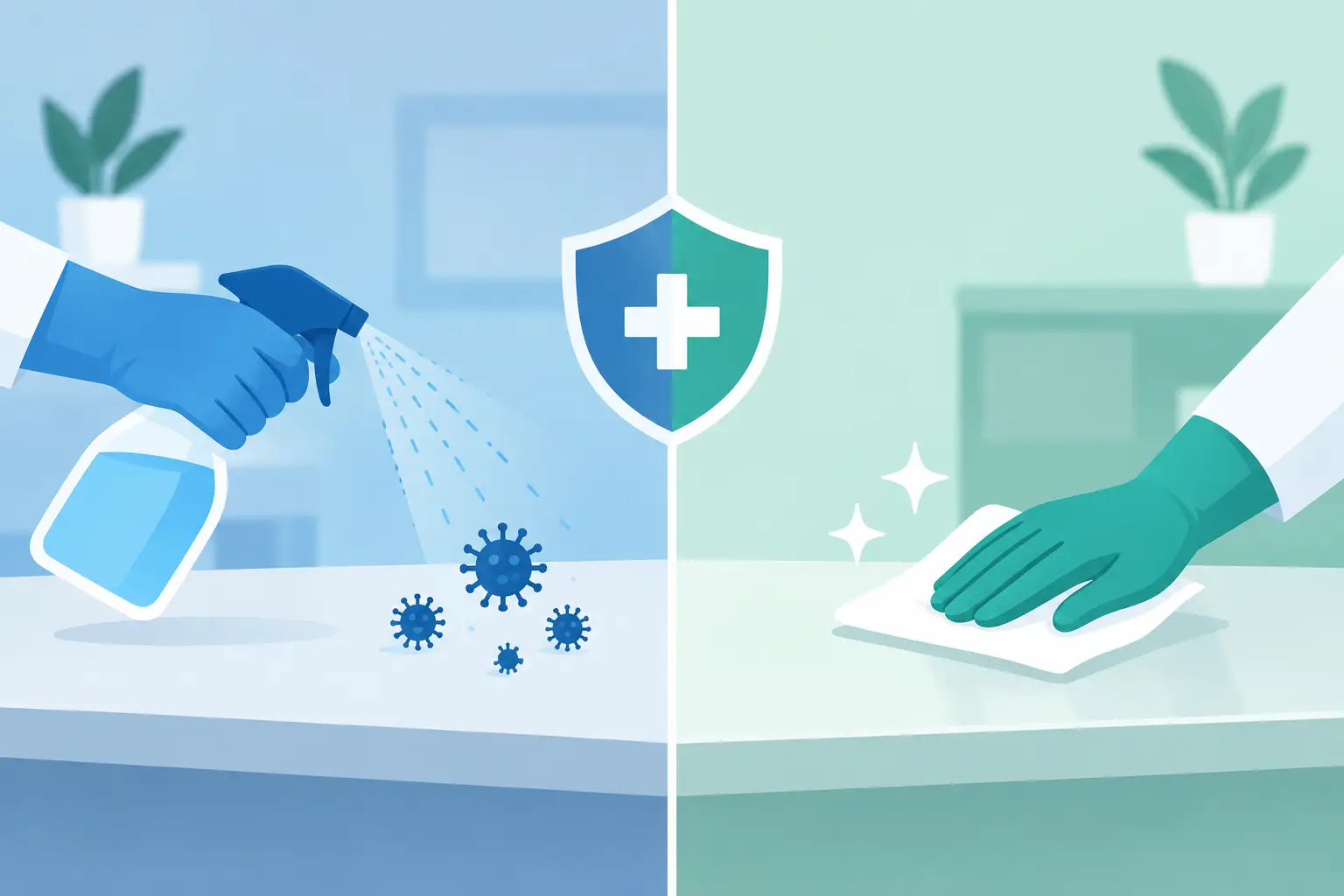
Sanitizing reduces germs on a surface to a level considered safer by public-health standards. It does not necessarily eliminate every microorganism. In practical terms, sanitizing is often suitable for regularly touched surfaces in lower-risk situations, such as dining tables, door handles, desks, and many common household areas after routine cleaning.
Disinfecting uses an approved product to kill or inactivate a broader range of germs on hard, nonporous surfaces. It is generally the better choice where illness, bodily fluids, raw food contamination, or a higher volume of users creates greater hygiene concerns. Think restroom fixtures, shared office equipment, clinic waiting areas, kitchen preparation surfaces, gym touchpoints, and high-traffic entry areas.
Neither process replaces cleaning. Dust, grease, food residue, soil, and spills can shield germs from a sanitizer or disinfectant. A surface should be cleaned first, then treated with the appropriate product according to its instructions.
Disinfection Versus Sanitisation Explained by Setting
The right level of treatment is not always “disinfect everything.” More product is not automatically better. Frequent disinfecting can be unnecessary in low-risk spaces, and using the wrong chemical can dull finishes, affect delicate materials, or leave residues where they are not wanted.
At home
Most homes benefit from consistent cleaning and targeted sanitizing of high-touch areas. Kitchen counters, sink handles, refrigerator handles, light switches, remotes, and bathroom fixtures are sensible priorities. If someone in the household is sick, disinfecting frequently touched hard surfaces can help limit the spread of germs.
For upholstered furniture, rugs, carpets, mattresses, and curtains, the approach is different. These porous materials cannot always be disinfected in the same way as a sealed countertop. Professional cleaning, hot-water extraction where appropriate, and careful treatment for the fabric type can remove embedded soil and improve freshness. Always avoid saturating fabrics or applying a chemical not approved for that material.
In offices and shared workplaces
A clean workplace supports a professional first impression, but it also affects employee comfort and confidence. Routine cleaning should remove dust, debris, fingerprints, and spills from desks, floors, break rooms, and restrooms. Sanitizing commonly touched surfaces may be appropriate as part of a regular program, especially in busy shared areas.
Disinfecting is more appropriate after a reported illness, in restrooms, around shared phones and keyboards when product compatibility allows, and in spaces where many people move through during the day. The schedule should reflect actual traffic. A lightly used office may need a different plan from a customer-facing reception area, call center, or shared training room.
In restaurants, schools, gyms, and healthcare spaces
These environments have more specific hygiene demands. Food-service areas need products and procedures suitable for food-contact surfaces. Schools and gyms need close attention to touchpoints such as faucets, lockers, railings, tables, equipment handles, and restroom surfaces. Healthcare and retirement-care environments may require facility-specific protocols based on the people served and the risks present.
In these spaces, consistency matters as much as product choice. A documented routine, trained cleaners, proper dilution, and enough contact time produce better results than hurried wiping with a strong-smelling product.
Why Contact Time Matters
One of the most common cleaning mistakes is spraying a disinfectant and wiping it away immediately. Most products need the surface to remain visibly wet for a stated period, often called contact time or dwell time. That time varies by product and by the germs the product is designed to address.
If the label says to keep the surface wet for several minutes, a quick mist and wipe will not deliver the claimed disinfecting result. The same principle applies to sanitizers. Read the label, use the product only on approved surfaces, and follow instructions for rinsing, particularly on food-contact areas.
Good ventilation also matters. Open windows where practical, use ventilation systems, and avoid combining cleaning products. Mixing chemicals can create harmful fumes and does not make a surface cleaner.
Choosing Products Without Compromising Surface Care
Eco-conscious cleaning does not mean ignoring hygiene. It means selecting products thoughtfully, using only what is needed, and applying them correctly. A product should match the job, the surface, and the people using the area.
Hard, nonporous surfaces such as sealed tile, stainless steel, glass, laminate, and many finished countertops are generally easier to sanitize or disinfect. Unsealed wood, natural stone, damaged finishes, and some specialty flooring can be more sensitive. Strong chemicals may discolor, etch, strip protective coatings, or leave a slippery residue.
Before treating an unfamiliar surface, check the manufacturer’s care guidance and test a small, inconspicuous area if appropriate. This is particularly important for polished floors, delicate upholstery, carpets, and specialty fixtures. Professional-grade equipment and trained techniques can make a real difference when a space needs deep cleaning without sacrificing the condition of valuable surfaces.
A Practical Routine for Better Hygiene
For most homes and businesses, hygiene works best as a routine rather than a response to visible dirt. Start by cleaning surfaces to remove grime. Then sanitize or disinfect where the risk level calls for it. Focus effort on high-touch points and areas with food, moisture, shared equipment, or vulnerable occupants.
A practical approach includes regular attention to entry handles, switches, faucets, toilet flush handles, countertops, tables, and shared devices. During illness outbreaks or after contamination, increase the frequency and use an appropriate disinfectant on compatible hard surfaces. For routine days, targeted sanitizing and thorough cleaning may be enough.
It also helps to separate tools by area. Using the same cloth from a restroom on a break-room counter can spread contamination rather than remove it. Clean microfiber cloths, correctly maintained mop heads, and well-managed equipment support a higher standard from room to room.
When Professional Cleaning Is the Better Choice
Some cleaning needs go beyond a quick wipe-down. Move-out cleaning, post-construction dust, carpet stains, large commercial floors, high-traffic restrooms, and healthcare-adjacent environments require time, equipment, and a clear process. A professional cleaning team can assess the space, identify sensitive materials, and build a schedule around the way the property is actually used.
For property managers and business operators, this creates consistency. For homeowners and tenants, it removes the pressure of trying to manage a demanding clean with limited time and household products. Eco Smart Cleaning approaches each job with the same goal: fresh, spotless spaces that look cared for and are cleaned with hygiene and surface safety in mind.
The next time you reach for a spray bottle, pause and consider the job in front of you. Clean first, choose sanitizing for everyday germ reduction, reserve disinfecting for higher-risk situations, and give the product time to work. That simple decision helps keep your home or workplace welcoming, healthy, and ready for the people who rely on it.


 +64 021 480 489