

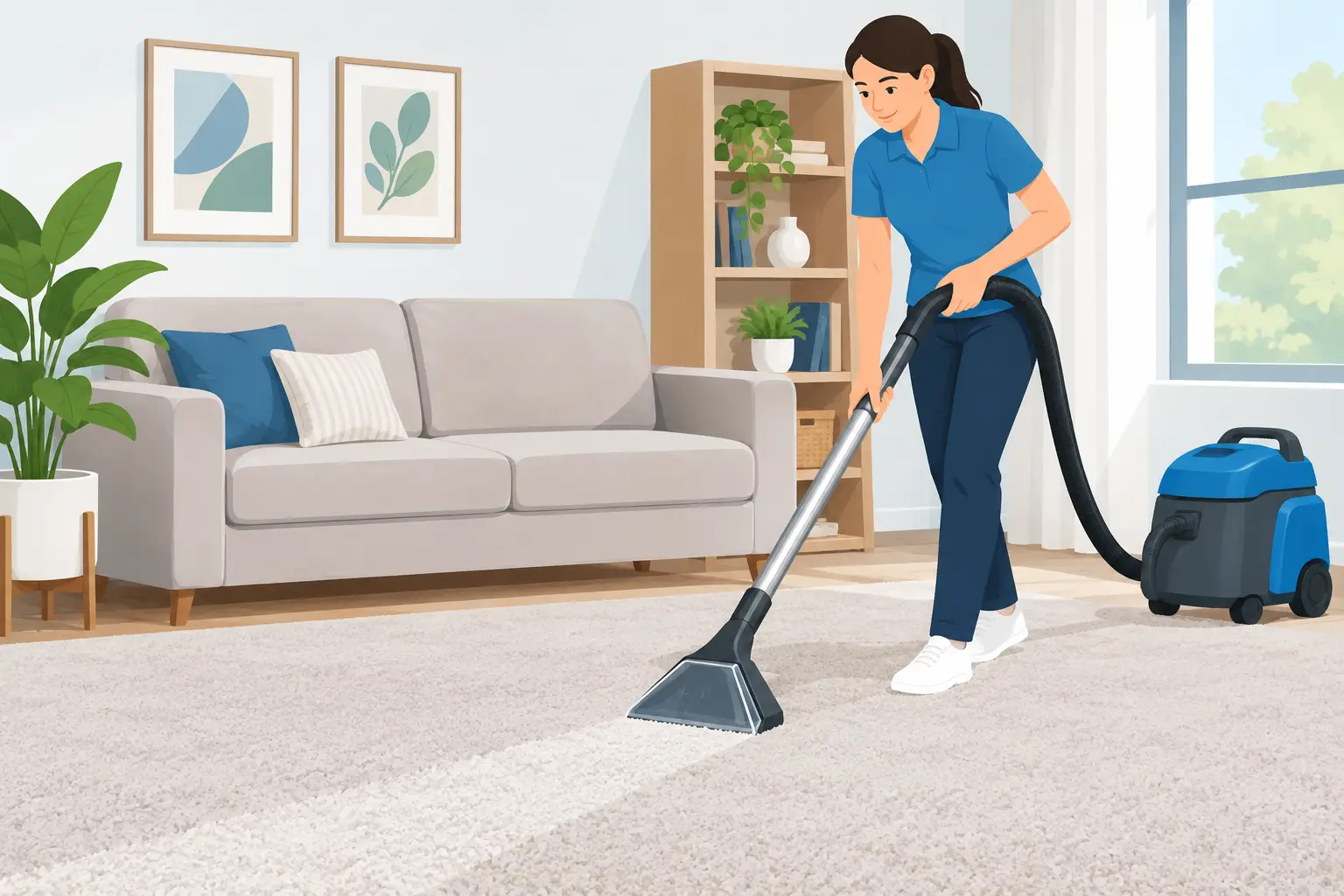
A carpet can look acceptable from the doorway while holding weeks of tracked-in grit, pet hair, food crumbs, and fine dust deep in its fibers. That is why the question of how frequently clean carpets matters more than many homeowners expect. Regular care keeps rooms looking fresh, supports a healthier indoor environment, and helps carpets last longer before they need replacing.
There is no single schedule that suits every home or workplace. A quiet guest room needs very different care from a family living room, a rental property between tenants, or a busy office entrance. The right approach depends on foot traffic, occupants, pets, spills, and the type of carpet underfoot.
How Frequently to Clean Carpets at Home
For most homes, vacuuming high-use areas once or twice a week is a sensible baseline. Bedrooms and lower-traffic rooms may only need weekly vacuuming, while entryways, hallways, stairs, and living areas often benefit from more frequent attention. Vacuuming is not just about visible crumbs. It removes dry soil before it gets pressed into the carpet pile and starts wearing the fibers down.
A professional deep carpet clean is generally a good idea every 12 months for a typical household. This removes embedded dirt that regular vacuuming cannot reach and refreshes the appearance of the carpet. If the carpet is lightly used and well maintained, a professional clean every 12 to 18 months may be enough.
Households with children, pets, frequent visitors, or allergy concerns should usually arrange professional cleaning every 6 to 12 months. These homes deal with more hair, dander, outdoor dirt, accidental spills, and everyday wear. Cleaning sooner can prevent a gradual buildup from becoming a visible problem.
For a home being prepared for sale, a move-out, or the arrival of new tenants, professional carpet cleaning is often worth scheduling even if the carpet was cleaned within the past year. A fresh, spotless carpet makes the entire property feel more cared for and presentable.
Your Carpet Cleaning Schedule Depends on Traffic
Foot traffic is the clearest guide. Think about where people walk first after coming inside, where children play, and where pets rest. Those spots collect soil faster than the rest of the room, even when stains are not obvious.
Low-traffic spaces
Guest bedrooms, formal lounges, and rooms that are rarely used can often be vacuumed weekly or every other week. Plan a deeper clean about every 12 to 18 months unless a spill or odor needs earlier attention. Do not wait for the carpet to look dirty. Fine dirt can still settle near the backing and slowly dull the fibers.
Average family use
Living rooms, bedrooms, and family rooms in an average household generally need weekly vacuuming and professional cleaning every 9 to 12 months. Focus extra vacuuming on paths through the room, especially between doors, sofas, and hallways.
Heavy-use homes
If your household includes active children, indoor pets, entertaining, or regular outdoor activity, vacuuming two or three times each week can make a noticeable difference. Deep cleaning every 6 to 9 months is often the better choice. It helps manage odors and stains before they become difficult to remove.
High-traffic commercial settings
Offices, schools, restaurants, retail spaces, gyms, healthcare facilities, and retirement-care environments need a planned carpet-care program rather than an occasional clean. Daily spot care and frequent vacuuming protect appearance between services. Depending on the site, professional extraction cleaning may be needed every 3 to 6 months, with targeted cleaning of entrances and busy walkways even more often.
A clean carpet contributes to a professional first impression, but it also supports hygiene standards and protects a significant flooring investment. In spaces serving customers, students, patients, or residents, consistency matters as much as appearance.
Signs Your Carpets Need Cleaning Sooner
Calendar reminders are helpful, but the carpet itself will often tell you when it needs attention. A gray or darkened path in a hallway is an obvious signal, yet earlier signs can be more subtle.
Persistent odors, especially around pet areas or upholstered furniture, are a reason to act. So are recurring allergy symptoms indoors, a carpet that feels matted underfoot, or fibers that no longer spring back after vacuuming. If socks pick up dust after walking across the room, there is likely more soil in the carpet than a standard vacuum can remove.
Stains should be treated promptly. The longer coffee, red wine, food, mud, or pet accidents sit in carpet fibers, the greater the chance of permanent discoloration or lingering odor. Blot spills with a clean white cloth rather than rubbing them, which can push the stain deeper and spread it outward. Avoid soaking the carpet with household cleaners, as excess moisture can leave residue or create drying issues.
Why Regular Deep Cleaning Protects Your Carpet
Carpet fibers trap particles brought in on shoes, paws, clothing, and open windows. Some of that material is visible, but much of it is fine and abrasive. As people walk across the carpet, these particles can rub against the fibers like sandpaper. Over time, the carpet may flatten, lose color clarity, and show worn traffic lanes.
Professional carpet cleaning removes soil from deeper within the pile using equipment designed for the job. It can also address residues left behind by spills or unsuitable cleaning products. The benefit is not only a cleaner look. Regular deep cleaning can help preserve texture, reduce odors, and extend the usable life of the carpet.
There is a balance to strike. Over-wetting a carpet, using too much detergent, or attempting aggressive stain removal can do more harm than good. The safest method depends on the carpet fiber, backing, condition, and manufacturer guidance. Wool, delicate rugs, and heavily stained carpets often need a more careful approach than synthetic wall-to-wall carpet.
Simple Habits Between Professional Services
Professional cleaning works best when paired with routine care. Vacuum slowly enough for the machine to lift dry soil, particularly in entrances, hallways, and beneath dining tables. Empty or replace vacuum bags and filters as needed so suction stays effective.
Use doormats at exterior doors and encourage family members, staff, or visitors to remove muddy footwear when practical. This is especially helpful during wet weather, when moisture carries soil deeper into carpet fibers. Moving furniture occasionally also prevents uneven wear and reveals areas that may have been missed.
For pet households, address accidents immediately and avoid masking odor with fragrance alone. The source needs to be cleaned properly. If one area is repeatedly affected, professional treatment may be needed to reach contamination beneath the surface.
When It Is Time to Call a Professional
A rented machine may help with a small fresh spill, but it is not always the best choice for a full carpet restoration. DIY cleaning can leave carpets too wet, cause wicking where old stains return as the carpet dries, or leave detergent behind that attracts more dirt.
Professional service is particularly useful before moving out, after construction work, following a large spill, or when odors and stains have resisted home treatment. It is also a practical option for landlords and property managers preparing a home for inspection or new occupants. For commercial sites, scheduled service avoids the disruption of waiting until carpets look visibly neglected.
Eco Smart Cleaning can match carpet cleaning to the condition of the space, the level of traffic, and the needs of the people using it. The goal is straightforward: clean carpets that feel fresher, look cared for, and support a comfortable home or workplace.
A good carpet-cleaning routine is less about following a rigid date on the calendar and more about responding before dirt becomes damage. Keep up with vacuuming, act quickly on spills, and schedule professional cleaning at the pace your space truly needs.


 +64 021 480 489