

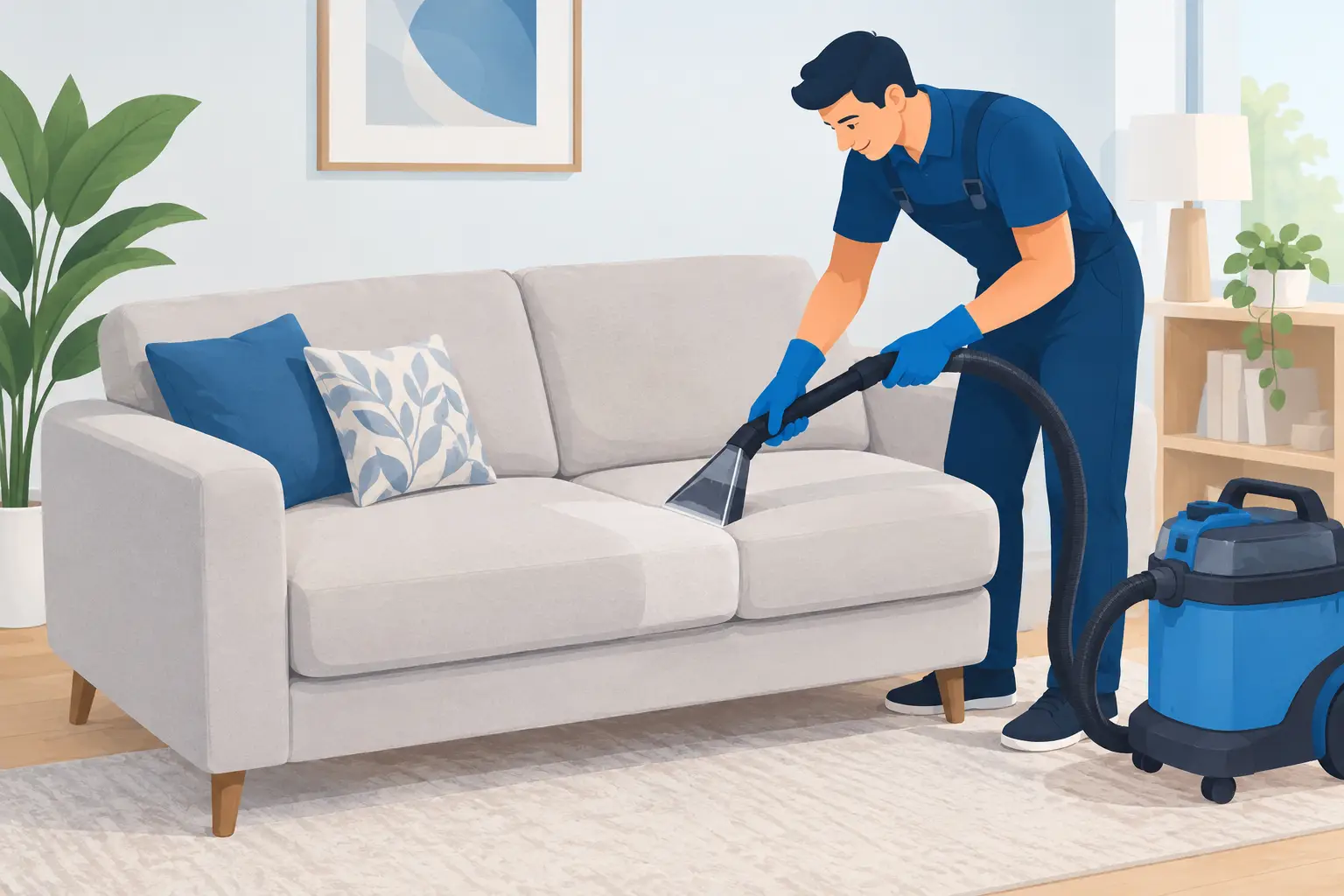
A sofa can look tidy from across the room while holding weeks of body oils, food crumbs, pet hair, dust, and everyday marks in its fabric. Upholstery cleaning is not simply about improving appearance. Done properly, it helps create a fresher, more comfortable home while protecting furniture you use every day.
For busy households, tenants preparing for an inspection, landlords refreshing a rental, and workplaces that welcome customers or staff, upholstered furniture often needs more than a quick vacuum. The right cleaning method depends on the fabric, the stain, the furniture’s condition, and how quickly it needs to be back in use.
What Professional Upholstery Cleaning Can Remove
Fabric furniture collects more than visible spills. Cushions and armrests are high-contact surfaces, so they gradually absorb oils from skin and hair, airborne dust, pet dander, and odors. Light-colored upholstery may show the problem first, but dark fabric can be just as affected even when it does not look noticeably dirty.
Professional cleaning targets this buildup below the surface. It can lift tracked-in soil, refresh dull-looking fabric, reduce lingering odors, and remove many common spots from food, drinks, pets, and everyday use. The result is furniture that looks more cared for and feels more inviting.
There are limits, and a reliable cleaner should be clear about them. Some stains have permanently changed the color of the fabric, especially old spills, bleach marks, ink, dye transfer, or damage caused by harsh household products. Cleaning can improve many of these areas, but it cannot always reverse wear or color loss. Early treatment gives stains the best chance of coming out.
Why Fabric Type Changes the Cleaning Method
Not every couch or chair should be cleaned the same way. A method that works well on a durable synthetic sofa may be unsuitable for delicate natural fibers, velvet, linen blends, or fabric with a sensitive backing. Using too much moisture can cause water marks, shrinkage, color bleeding, or slow drying. Using the wrong chemical can leave a faded patch that is more noticeable than the original stain.
Before work begins, a professional should inspect the upholstery, identify the fiber where possible, check the manufacturer’s care label, and test a discreet area. This small step helps determine whether the furniture is suitable for hot-water extraction, low-moisture cleaning, careful spot treatment, or another approach.
Hot-water extraction is often effective for many durable upholstered pieces because it flushes suspended soil from the fibers and extracts it with the cleaning solution. Low-moisture methods can be a better fit when drying time is a priority or when the material requires a more controlled process. Neither method is automatically best. The right choice is the one that cleans safely and leaves the furniture in good condition.
When Your Furniture Needs More Than a Vacuum
Regular vacuuming is useful. It removes loose dust, crumbs, and pet hair before they are pressed deeper into the fabric. However, vacuuming does not remove oily residue, dried spills, or the fine soil that gives upholstery a gray, flat appearance over time.
Consider professional upholstery cleaning when cushions look darker where people sit or rest their arms, when a room has a stale or pet-related odor, or when an accidental spill has left a visible mark. It is also worthwhile before hosting family, moving into a home, preparing a property for new tenants, or putting a well-used piece of furniture up for sale.
In commercial settings, reception seating, restaurant booths, waiting-room chairs, and office soft furnishings shape a visitor’s first impression. Clean upholstery supports a professional presentation and helps staff and customers feel more comfortable in shared spaces. High-traffic furniture may need attention more often than a rarely used chair in a guest room.
Preparing for Upholstery Cleaning
A little preparation makes the appointment more efficient and helps protect nearby belongings. Clear personal items, blankets, and removable decorative cushions from the furniture. If possible, move small tables, lamps, and breakable items away from the work area. Larger furniture can usually be assessed during the visit, so there is no need to strain yourself trying to move a heavy sofa.
Point out stains and explain what caused them if you know. Coffee, wine, grease, pet accidents, and cosmetics can require different treatment. Let the cleaner know whether you have already used a stain remover, especially if it contained bleach or a strong solvent. Honest information helps avoid unwanted reactions and lets the cleaning process be tailored to the fabric.
It is also sensible to plan for drying time. Open windows when weather permits, use normal indoor airflow, and avoid sitting on the furniture until it is dry. Drying time varies with fabric thickness, cleaning method, room temperature, and ventilation. A lightly cleaned chair may dry relatively quickly, while a large, heavily soiled sectional can take longer.
Everyday Care Between Professional Visits
Good maintenance keeps upholstery looking better between deeper cleans. Vacuum upholstered furniture regularly with the appropriate attachment, paying attention to seams, under cushions, and crevices where dust collects. Rotate and fluff removable cushions if the manufacturer allows it, so one seat does not wear more quickly than the others.
For fresh spills, blot gently with a clean white cloth rather than rubbing. Work from the outside of the spill toward the center to avoid spreading it. Avoid soaking the fabric and resist the temptation to use multiple household products. Dish soap, vinegar, powdered cleaners, and store-bought sprays can sometimes leave residue, set a stain, or affect colorfastness.
Pet owners may benefit from placing washable throws over favorite spots, but throws are not a substitute for cleaning the furniture underneath. Body oils and fine hair still find their way into the fabric, particularly on armrests and cushions. If odor is a concern, treat it promptly rather than masking it with fragrance.
A Better Choice for Homes, Rentals, and Workplaces
The value of professional upholstery cleaning is not limited to a brighter-looking sofa. It can help extend the useful life of quality furniture by removing abrasive grit that gradually wears on fibers. For rentals and managed properties, it helps restore a clean, presentable standard between occupants. For businesses, it supports hygiene routines and the polished environment customers expect.
Eco Smart Cleaning uses professional equipment and eco-friendly cleaning products selected for the surface and the job. That matters when you want a practical clean without treating your furniture as if every fabric has the same needs. A careful assessment, detailed treatment, and dependable scheduling can make specialist cleaning feel straightforward rather than disruptive.
The best time to arrange upholstery cleaning is usually before the furniture looks beyond saving. A timely clean can refresh the room, reduce the pressure of a move or inspection, and help the pieces you rely on every day stay comfortable, clean, and ready to use.


 +64 021 480 489