

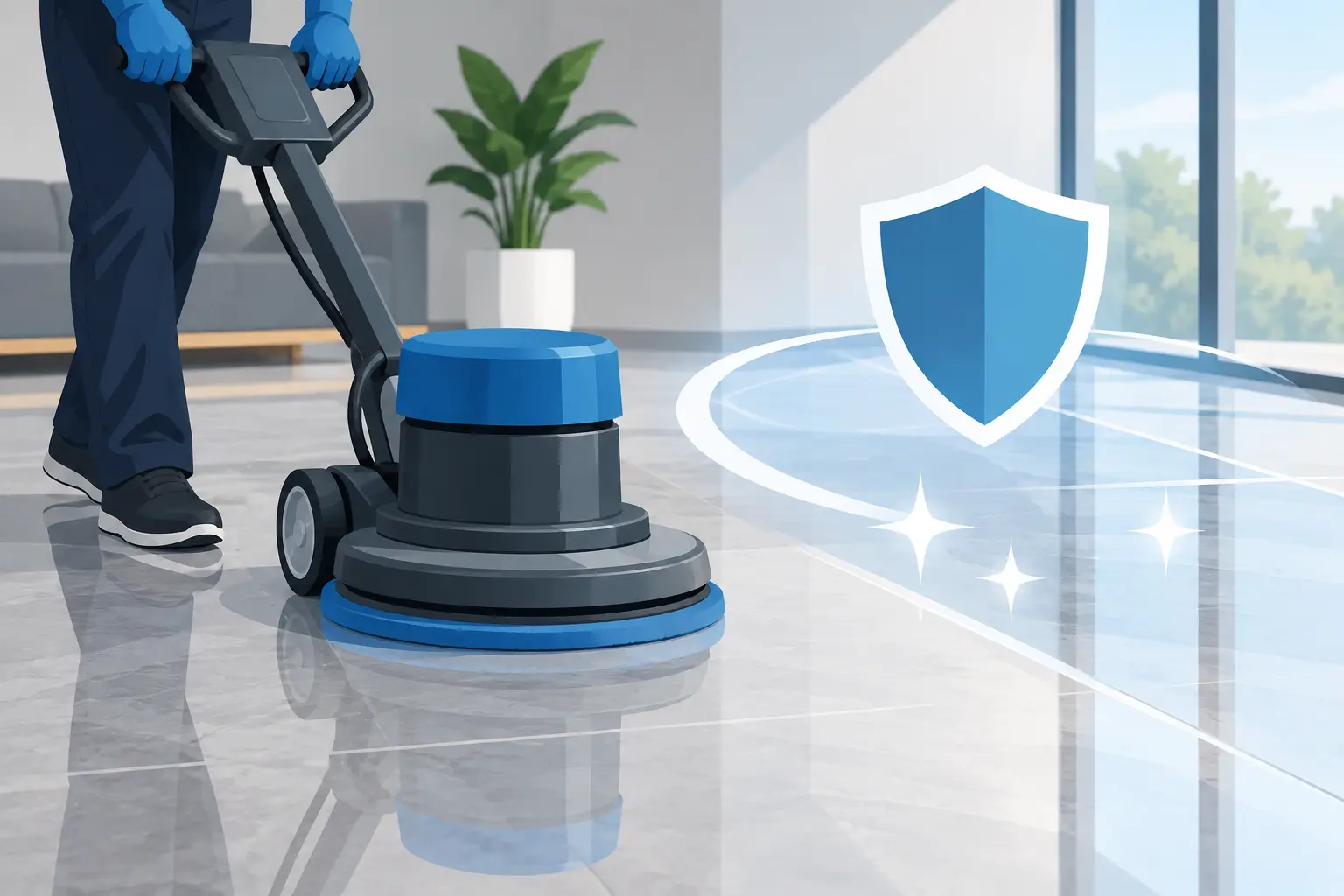
A dull floor changes the feel of an entire room. Scuffs catch the light, tracked-in grit makes surfaces look tired, and a once-clean entryway can start to feel neglected. Professional floor polishing brings back a clean, cared-for appearance while helping protect the surface beneath daily foot traffic.
For homeowners, that can mean a brighter kitchen, hallway, or living area without the frustration of trial-and-error products. For offices, schools, retail spaces, and healthcare facilities, it supports a professional first impression and a safer, more hygienic environment. The right approach depends on what the floor is made of, how it has been maintained, and what has caused it to lose its finish.
What Floor Polishing Actually Does
Floor polishing is more than applying a product that makes a surface look shiny. It is a controlled cleaning and finishing process designed to remove embedded soil, reduce the appearance of light wear, and improve the floor’s appearance without damaging its protective layer.
On suitable surfaces, professional equipment and the correct pads can refine the finish, restore clarity, and create an even result. In commercial settings, polishing may also help maintain a floor’s protective coating, making routine cleaning easier and reducing the harsh abrasion caused by dry dust and grit.
The goal is not always a high-gloss shine. A polished concrete floor, for example, may be finished to a natural satin look, while some vinyl or stone floors may need a more reflective finish. Good floor care matches the result to the surface, the space, and the level of traffic it receives.
Which Floors Can Be Polished?
Not every hard floor should be polished in the same way. Using the wrong pad, chemical, or machine can leave marks, create a slippery finish, or wear through a protective coating. A professional assessment is especially useful when the flooring is older, heavily worn, or installed across a large commercial area.
Vinyl, VCT, and resilient flooring
Vinyl composition tile and many resilient commercial floors commonly benefit from periodic cleaning, refinishing, and burnishing. These floors often appear in schools, medical facilities, offices, and retail environments because they are durable and practical. Over time, however, their finish can become dull from foot traffic, trolley wheels, and repeated mopping.
The process may involve deep cleaning, removing damaged finish where necessary, applying a compatible protective finish, and polishing it to an even sheen. The result is a cleaner-looking floor that is easier to maintain between scheduled services.
Natural stone and terrazzo
Marble, limestone, travertine, and terrazzo require a more careful approach. Acidic cleaners, harsh scrubbing, and unsuitable polishing products can etch or dull stone rather than improve it. Stone polishing often uses specialized compounds and equipment to refine the surface and bring back its natural character.
Because stone varies in hardness and porosity, there is no single method that suits every floor. A small test area can help confirm the right process before work begins across a lobby, entrance, kitchen, or large shared space.
Concrete floors
Polished concrete is popular in warehouses, showrooms, garages, and modern homes because it is hard-wearing and easy to keep presentable when maintained properly. Even so, concrete can hold dust, develop scuffing, and lose its even appearance in high-traffic zones.
Cleaning and polishing concrete can improve its visual consistency, but deep scratches, cracks, staining, or moisture issues may require repair or a more involved restoration process first. Polishing improves the surface condition. It does not erase structural problems.
Wood and laminate flooring
Wood floors need a separate process from stone, vinyl, or concrete. True hardwood can sometimes be screened, refinished, or buffed, depending on the condition of its seal and the thickness of the wear layer. Laminate should never be treated as solid wood because aggressive polishing or excess moisture can damage its surface.
If a wood or laminate floor looks dull, a careful inspection is the best place to start. In some cases, thorough cleaning with a suitable product will achieve the right result. In others, the protective finish may need professional restoration rather than polish.
Signs It Is Time for Professional Floor Polishing
Routine mopping removes surface dirt, but it cannot always correct the buildup and wear that develop gradually. A floor may need more than standard cleaning when it looks cloudy after mopping, shows visible traffic lanes, has widespread scuffs, or no longer reflects light evenly.
In commercial properties, entrances, corridors, reception areas, and break rooms often show wear first. These areas carry more shoes, moisture, grit, and spills than the rest of the building. Addressing them early can prevent the floor from looking worn across the entire facility.
At home, the signs may be less dramatic but still noticeable. Floors can lose their clean appearance around doorways, under dining tables, near pet areas, and along the path between the kitchen and living space. If cleaning no longer produces a fresh, spotless look, the issue may be the finish rather than the cleaning routine.
Why Surface Preparation Matters
A polished result is only as good as the cleaning and preparation that happen beforehand. Dust, oils, soap residue, and old products must be removed properly before any finish is polished or renewed. If they are left behind, the floor can look streaky, patchy, or dull again soon after the work is completed.
Preparation also gives a cleaning team the chance to identify concerns such as loose tiles, deep scratches, worn sealers, staining, or moisture damage. Those issues do not always prevent polishing, but they can change the recommended method and expected outcome.
This is where professional-grade equipment makes a practical difference. The right machine pressure, pad selection, cleaning solution, and drying time all affect the finish. Home-grade tools can be useful for daily care, but they rarely deliver the consistency needed for large spaces or heavily used floors.
The Benefits Go Beyond Shine
A well-maintained floor helps a space feel cleaner because it is cleaner. Removing accumulated grime and residue supports better hygiene, particularly in facilities where many people share the same space. It also helps staff, residents, visitors, and customers feel more comfortable in the environment.
Appearance matters, too. A clean, even floor supports the professional first impression businesses work hard to create. For landlords and property managers, restored hard floors can improve the presentation of a property between tenants. For homeowners preparing to sell, host guests, or simply reset a busy household, it can make the room feel cared for again.
There is also an asset-protection benefit. Regular, appropriate maintenance can reduce the need for premature replacement by protecting compatible finishes and preventing abrasive grit from grinding into the surface. That does not mean every floor needs frequent polishing. Over-polishing or using the wrong process can be counterproductive, which is why the schedule should reflect actual traffic and floor type.
How Often Should Floors Be Polished?
There is no fixed answer. A quiet home with protected wood flooring may only need occasional professional attention, while a busy retail entrance may need scheduled polishing or burnishing much more often. The biggest factors are foot traffic, the type of floor, weather exposure, cleaning practices, and whether the surface has a protective finish.
A sensible plan separates daily or routine cleaning from periodic restorative care. Routine cleaning removes dust, spills, and visible dirt. Professional floor work deals with the gradual wear that routine mopping cannot correct. This approach helps avoid both neglect and unnecessary treatment.
For commercial sites, scheduling work outside operating hours can minimize disruption and allow adequate drying or curing time. For homes, planning service around move-out dates, post-build cleanup, special events, or seasonal deep cleaning can make the process easier to manage.
Keeping a Polished Floor Looking Its Best
After professional service, simple habits make a real difference. Use entry mats to capture grit and moisture, clean spills promptly, and avoid harsh cleaners that leave residue or damage the finish. Furniture pads can prevent scratches, while regular vacuuming or dust mopping removes the fine particles that act like sandpaper underfoot.
Avoid assuming that more product equals better protection. Excess cleaner, wax, or shine products can build up and leave a floor cloudy or slippery. When in doubt, use products recommended for the specific surface and follow dilution instructions carefully.
Eco Smart Cleaning can assess the floor, its current finish, and the demands of the space before recommending a practical service plan. That means homeowners and facility managers receive care suited to their surface rather than a one-size-fits-all treatment.
A floor does not need to look worn before it receives attention. Timely care keeps surfaces cleaner, safer, and more presentable, giving every room or facility the polished result people notice when they walk in.


 +64 021 480 489